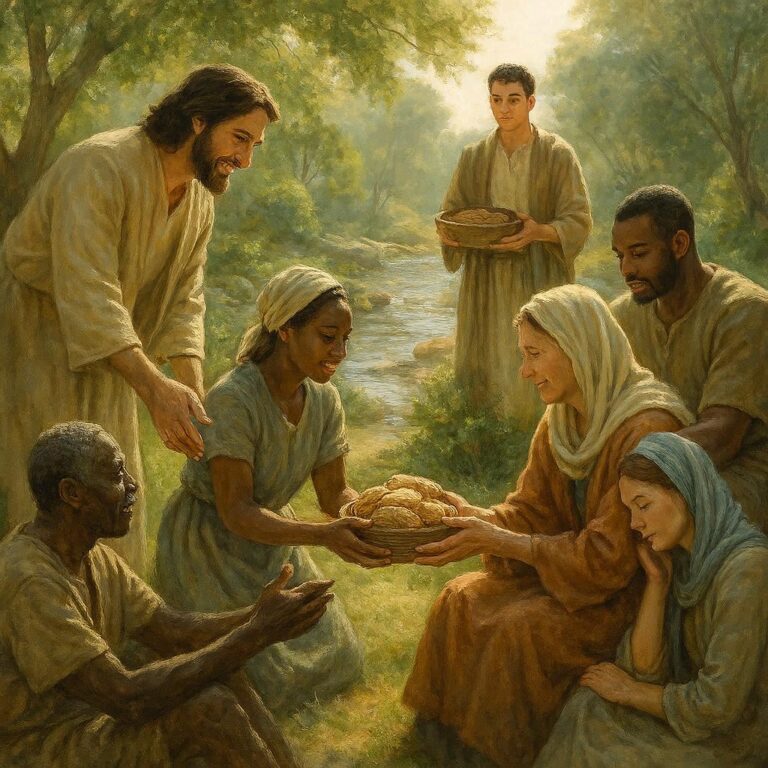
If you’ve ever wondered about the biblical meaning of blessed, you’re not alone. In everyday conversation, we call ourselves “blessed” when we get a promotion, find a parking spot, or our kids are healthy. It often feels like a synonym for lucky or fortunate. But open the Bible, and you’ll find that this word carries a weight, a depth, and a revolutionary promise that changes everything.
The biblical concept of blessed is a cornerstone of Scripture, a golden thread woven from Genesis to Revelation. It’s not a superficial sticker of divine approval on our existing life. Instead, it describes a state of ultimate well-being, divine favor, and deep happiness that is rooted not in circumstance, but in connection with God. It’s an invitation into a reality that often looks upside-down compared to the world’s values.
This article is your guide to unpacking this rich, life-altering idea. We’ll explore its original language, see its transformative power in key passages like the Beatitudes, and discover what it truly means to live a blessed life.
Table of Contents
ToggleUnpacking the Original Language: Hebrew and Greek Roots
To grasp the full biblical meaning of blessed, we must go back to the original words. The English term “blessed” translates two primary words from Hebrew and Greek, each with a distinct flavor.
The Hebrew Word: Barak and Asher
In the Old Testament, two Hebrew words are crucial:
-
Barak (בָּרַךְ): This verb means “to kneel,” “to bless,” or “to praise.” It paints a picture of honor, conferring favor, or endowing with power. When God baraks humanity, He is extending His divine favor and empowering them for His purposes.
-
Example: “God blessed (barak) them and said, ‘Be fruitful and increase in number…'” (Genesis 1:28).
-
-
Asher (אֶשֶׁר): This is the state of happiness, fortune, or blessedness that results from barak. It’s less about the action and more about the condition. The person who is asher is in an enviable, joyful position because of God’s favor.
-
Example: “Blessed (asher) is the one who does not walk in step with the wicked…” (Psalm 1:1).
-
The Greek Word: Makarios
The New Testament uses the Greek word Makarios (μακάριος). This is a powerful term that describes a state of being that is blissful, supremely fortunate, and well-off. In ancient Greek literature, makarios was used for the gods or for the dead who lived in eternal bliss. It signifies a happiness that is complete and independent of earthly changes.
When Jesus begins the Sermon on the Mount with “Blessed (Makarios) are…” He is declaring a present reality of deep happiness and divine favor for those who, by worldly standards, might seem anything but fortunate.
Comparative Table: Key Biblical Words for “Blessed”
| Language | Word | Part of Speech | Primary Meaning | Key Image |
|---|---|---|---|---|
| Hebrew | Barak (בָּרַךְ) | Verb | To kneel, to bless, to endow with favor | The action of conferring power and goodness. |
| Hebrew | Asher (אֶשֶׁר) | Adjective/Noun | Happy, blessed, in a state of fortune | The resulting condition of joy and well-being. |
| Greek | Makarios (μακάριος) | Adjective | Blissfully happy, supremely fortunate | A deep, enduring state of happiness rooted in God. |
Key Insight: “The biblical ‘blessed’ is not a hope for a good day, but a declaration of a good God, regardless of the day.” – A reflection on Makarios.
The Beatitudes: The Blueprint of Upside-Down Blessing
No discussion of the biblical meaning of blessed is complete without a deep dive into the Beatitudes (Matthew 5:3-12). Here, Jesus launches His most famous sermon by redefining blessedness in a way that stunned His audience—and continues to challenge us today.
He takes groups of people considered by society to be pitiable, lacking, or weak and pronounces them Makarios—supremely fortunate, in a state of divine favor. Let’s look at a few.
Blessed Are the Poor in Spirit
“Blessed are the poor in spirit, for theirs is the kingdom of heaven.” (Matthew 5:3)
This isn’t about material poverty but spiritual humility. It’s the person who recognizes their utter need for God, their spiritual bankruptcy. The world says, “Blessed are the self-sufficient.” Jesus declares the opposite. The blessing? “Theirs is the kingdom of heaven.” Not “will be,” but a present-tense reality. The one who admits their need gets everything—God’s very reign and resources.
Blessed Are Those Who Mourn
“Blessed are those who mourn, for they will be comforted.” (Matthew 5:4)
How can mourners be “blessed”? This mourning is a deep sorrow over sin, evil, and the brokenness of the world. It’s the opposite of apathy or trivial happiness. The blessing is a promise: “They will be comforted.” This is the comfort of God’s presence, forgiveness, and the ultimate healing He will bring. The blessing is found in the divine comfort that meets holy grief.
Blessed Are the Meek
“Blessed are the meek, for they will inherit the earth.” (Matthew 5:5)
Meekness is not weakness. It is strength under control—the posture of a trained horse or a wise leader. It is trust in God’s justice rather than self-assertion. The world says the aggressive and powerful inherit the earth. Jesus promises that true, lasting possession (“they will inherit the earth”) belongs to those who trust God with their rights.
A Helpful List: The Beatitudes at a Glance
-
Blessed are the poor in spirit: Recognizers of need → Receive the Kingdom.
-
Blessed are those who mourn: Feelers of brokenness → Receive comfort.
-
Blessed are the meek: Trusters in God’s justice → Inherit the earth.
-
Blessed are those who hunger for righteousness: Seekers of God’s way → Are satisfied.
-
Blessed are the merciful: Extenders of grace → Receive mercy.
-
Blessed are the pure in heart: Single-minded in devotion → See God.
-
Blessed are the peacemakers: Active healers → Are called God’s children.
-
Blessed are the persecuted: Sufferers for righteousness → Own the Kingdom.
Note for Readers: The Beatitudes are not a checklist for earning favor. They are a portrait of a heart transformed by grace. You don’t strive to be poor in spirit; you recognize that you are. The blessings describe the character of those who are in Christ and the promises they can rely on.
Blessing in the Old Testament: Covenants, Promises, and Action
In the Old Testament, blessing is deeply connected to God’s covenant promises. It’s tangible, often involving family, land, health, and prosperity—but always within the context of relationship and obedience.
The Abrahamic Covenant: Blessed to Be a Blessing
God’s promise to Abraham sets the pattern:
“I will make you into a great nation, and I will bless you; I will make your name great, and you will be a blessing… and all peoples on earth will be blessed through you.” (Genesis 12:2-3)
Here, God’s blessing (barak) has a dual purpose: to benefit Abraham and to flow through him to the world. The blessed life is never an end in itself; it’s a conduit. The ultimate fulfillment of this is Jesus Christ, a descendant of Abraham, through whom all nations receive spiritual blessing (Galatians 3:14).
The Priestly Blessing: A Formula of Favor
One of the most beautiful expressions is the Aaronic Blessing (Numbers 6:24-26):
“The Lord bless you and keep you; the Lord make his face shine on you and be gracious to you; the Lord turn his face toward you and give you peace.”
This three-part blessing asks for God’s protection, His favor (the shining face signifies pleasure and goodwill), and His peace (shalom—wholeness, completeness). It’s a holistic prayer for total well-being under God’s attentive care.
Comparative Table: Old vs. New Testament Emphasis on Blessing
| Aspect | Old Testament Emphasis | New Testament Emphasis |
|---|---|---|
| Primary Focus | Often communal, national, and tangible (land, descendants, victory). | Primarily spiritual, personal, and relational (peace with God, the Holy Spirit). |
| Condition | Frequently tied to covenant obedience (Deuteronomy 28). | Secured by grace through faith in Christ (Ephesians 1:3). |
| Flow | God blesses His people → They model His goodness to nations. | God blesses believers → They become blessings through service and witness. |
| Key Image | The Promised Land flowing with milk and honey. | The Kingdom of Heaven and spiritual riches in Christ. |
The Ultimate Blessed One: Jesus Christ
Understanding the biblical meaning of blessed reaches its peak in the person of Jesus. He is both the giver of blessing in the Beatitudes and the ultimate embodiment of the blessed life.
The Gospel of Mark opens with a profound declaration: “The beginning of the good news about Jesus the Messiah, the Son of God” (Mark 1:1). Immediately, Jesus is baptized, and a voice from heaven says, “You are my Son, whom I love; with you I am well pleased” (Mark 1:11). This is the essence of blessing: divine sonship, beloved identity, and God’s pleasure.
Yet, Jesus’ path to blessing looked nothing like the world’s expectation. He was a suffering servant (Isaiah 53), who for the joy set before him endured the cross (Hebrews 12:2). The Apostle Peter explains this paradox: “To this you were called, because Christ suffered for you, leaving you an example, that you should follow in his steps” (1 Peter 2:21).
Jesus shows us that the truly blessed life is one of obedient surrender to the Father’s will, sacrificial love, and trust that leads through suffering into resurrection glory. Our blessing is found in Him.
What Does It Mean for Us Today? Living the Blessed Life
So, how do we move from understanding to living out this biblical blessedness? It’s a shift from seeking blessing as a thing to living in blessedness as a state of being because of our relationship with God through Christ.
1. Recognize That Blessing Is Rooted in Identity, Not Activity.
The New Testament starts with our position: “Praise be to the God and Father of our Lord Jesus Christ, who has blessed us in the heavenly realms with every spiritual blessing in Christ” (Ephesians 1:3). If you are in Christ, you are already blessed with every spiritual blessing. The work is to believe it and live from that reality, not for it.
2. Redefine Your Source of Happiness.
Biblical blessedness (Makarios) is an inner joy and contentment that persists despite external poverty, mourning, or persecution. It comes from knowing God, being forgiven, having the Holy Spirit, and possessing a living hope. It is happiness that circumstances cannot take away.
3. Embrace the Purpose: You Are Blessed to Bless.
Like Abraham, we are blessed to be a blessing. God’s favor is not a trophy for our cabinet but a tool for His kingdom. It flows through:
-
Generosity: Sharing our resources (2 Corinthians 9:8-11).
-
Encouragement: Using our words to build up (Ephesians 4:29).
-
Service: Using our gifts and time for others (1 Peter 4:10-11).
4. Trust God’s Goodness in All Seasons.
A blessed life includes both green pastures and dark valleys (Psalm 23). Sometimes God’s blessing looks like provision and peace; sometimes it looks like sustaining grace and profound growth in the midst of hardship. Blessedness is trusting that God is good and for us, even when His ways are mysterious.
A Helpful List: Signs You’re Living the Biblically Blessed Life
-
Your deepest sense of security comes from who you are in God, not what you own.
-
You can experience joy and sorrow simultaneously, held by God’s comfort.
-
You are increasingly free from the need to assert your own rights or defend yourself.
-
Your heart’s greatest desire is to know God and see His righteousness prevail.
-
You find yourself quick to extend mercy and forgiveness to others.
-
You actively seek to make peace and heal relationships.
-
Your faith remains steadfast even under pressure or criticism for doing good.
Conclusion
The biblical meaning of blessed is a profound and beautiful departure from superficial luck. It is the deep, enduring state of happiness, favor, and wholeness that God gives to those who come to Him in humble dependence. From the covenantal promises of the Old Testament to the upside-down declarations of Jesus, blessing is ultimately found in a transformative relationship with God, exemplified by Christ. To live blessed is to live secure in our identity, purposeful in our generosity, and anchored in a joy that transcends every circumstance.
Frequently Asked Questions (FAQ)
Q: Does being blessed mean I will always be healthy, wealthy, and problem-free?
A: No. This is a common misunderstanding, often called the “prosperity gospel,” which is not a holistic biblical view. While God often gives good gifts, the biblical narrative is filled with blessed people (like Job, the Apostles, and Jesus Himself) who suffered greatly. Biblical blessing is the presence, favor, and purpose of God with us in all seasons of life, leading to eternal well-being.
Q: How can I be “blessed” if I’m going through a terrible time?
A: The Beatitudes speak directly to this. You can be “blessed” while mourning, being persecuted, or feeling spiritually poor because the blessing is God’s promise to be with you in that state—to comfort, to provide the Kingdom as your inheritance, to be your satisfaction. The blessing is the faithful presence of God in the trial, not necessarily the immediate removal of it.
Q: Is it wrong to say I’m blessed when good things happen?
A: Not at all! It is right and good to acknowledge God as the source of every good gift (James 1:17). The key is to remember that our fundamental state of blessedness isn’t dependent on those good things. We can thank God for blessings in our life while knowing our identity as blessed people is secure in Christ, regardless of our possessions or situation.
Q: What’s the difference between being “blessed” and being “happy”?
A: Everyday happiness is often an emotional response to favorable circumstances. Biblical blessedness (asher, makarios) is a deeper, more stable state of well-being and fortune that is rooted in a right relationship with God. It can include happiness, but it also undergirds and sustains us when happiness feels distant.
Additional Resource
For a deeper academic and pastoral exploration of the key Greek and Hebrew terms discussed in this article, we recommend the scholarly resource “Theological Wordbook of the Old Testament” and “Exegetical Dictionary of the New Testament.” A more accessible starting point online is the Blue Letter Bible (www.blueletterbible.org), which allows you to study word origins and uses directly in Scripture.
Disclaimer: This article is intended for informational and spiritual growth purposes. It is based on theological study and exegesis of the Christian Bible. While every effort has been made to ensure accuracy and depth, it should be read as a guide that complements, not replaces, personal study, pastoral counsel, and engagement with the biblical text itself.
Date: January 18, 2026
Author: Web Writer, Theological Insights Team