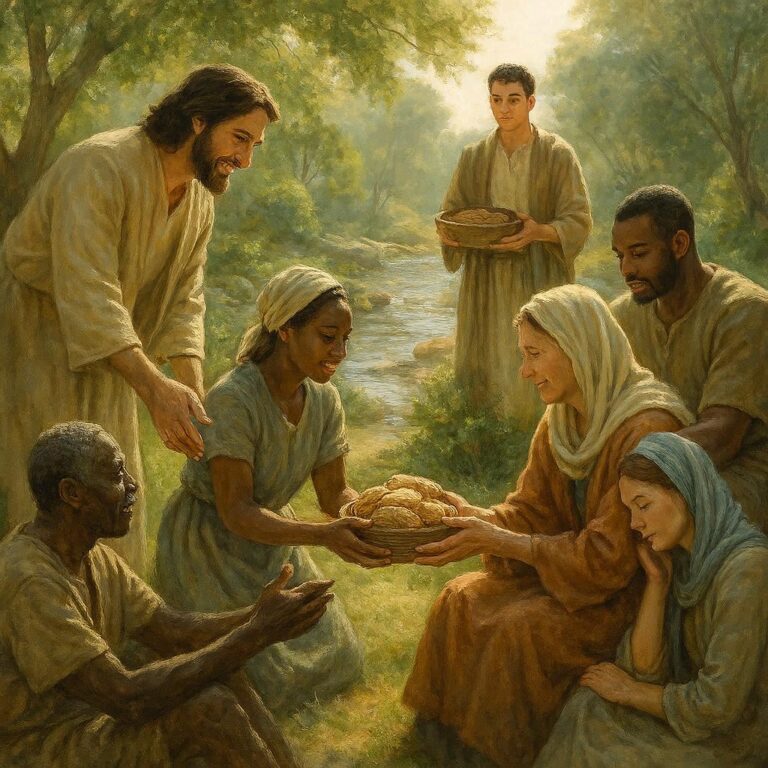
What does it mean to have faith? In everyday conversation, we might use the word to describe a vague hope or belief in something unseen. We say we have “faith” our team will win or that things will work out. But the biblical meaning of faith is far richer, more robust, and more concrete. It is the foundational currency of the Christian life, the very means by which we connect with God. Yet, its true definition is often misunderstood.
This article will serve as your comprehensive guide. We will journey beyond clichés to uncover the original Hebrew and Greek concepts, explore the profound definitions given in Scripture itself, and see how faith is portrayed not as a passive feeling but as an active, life-shaping force. Whether you are exploring Christianity for the first time or seeking to deepen your spiritual understanding, grasping the biblical essence of faith is essential.
Understanding the Core Biblical Definition
At the heart of any discussion on the biblical meaning of faith sits one key passage: Hebrews 11:1. This verse provides the theological backbone for the entire chapter, often called the “Hall of Faith.”
“Now faith is the substance of things hoped for, the evidence of things not seen.” (Hebrews 11:1, NKJV)
This definition is packed with two powerful ideas that defy a merely wishful understanding. Let’s break it down.
-
Faith as Substance (Hypostasis): The Greek word hypostasis translates to confidence, assurance, or reality. It was a legal term referring to the title deed that guaranteed ownership of a property. Imagine hoping to own a house. A title deed (hypostasis) is the concrete, tangible proof that makes your hope a legal reality. Similarly, biblical faith is the present assurance, the “title deed,” that what God has promised is already ours in spiritual reality. It gives substance to our hope.
-
Faith as Evidence (Elegchos): This word means proof, conviction, or that by which something is proven. Faith itself is the convincing evidence of spiritual realities we cannot perceive with our physical senses. It is the inner conviction that what is unseen (God, His promises, eternal life) is definitively real and true.
In essence, biblical faith is not a blind leap into the dark. It is a confident step into the light based on the trustworthiness of the One who promised. It takes what is future and hoped-for and makes it a present reality in the heart and mind of the believer.
Faith in the Original Languages: Hebrew vs. Greek
To fully appreciate the concept, it helps to see its roots in the Bible’s original languages.
| Aspect | Hebrew Concept ( אֱמוּנָה Emunah) | Greek Concept (Πίστις Pistis) |
|---|---|---|
| Primary Meaning | Firmness, steadfastness, reliability. | Persuasion, trust, conviction, fidelity. |
| Key Emphasis | Character: reliability and steadfastness, first of God, then of the faithful person. It’s a covenant word. | Action: the act of believing, trusting, and being persuaded. It’s a relational word. |
| Visual Picture | A sturdy pillar, a firm handhold, a secure foundation. | A hand reaching out to take hold of an offered gift. |
| Usage Focus | Often describes God’s faithful character (Deut. 7:9) and calls people to faithful living (Hab. 2:4). | Used extensively in the New Testament to describe trust in Christ for salvation (John 3:16, Eph. 2:8). |
These concepts beautifully merge. Biblical faith (Pistis) is a confident trust (Emunah) placed in the utterly faithful and reliable character of God (Emunah). Our faith is only as strong as the object in which we place it.
The Three Essential Elements of Biblical Faith
Based on Scripture, genuine faith is not a single, monolithic act but a dynamic interplay of three components. The Reformers often summarized these as:
1. Knowledge (Notitia)
Faith is not ignorant. It is based on content and truth. This is the informational component. To have faith in Jesus, one must know who He is and what He has done—specifically, His life, sacrificial death for sin, and resurrection (Romans 10:14). This knowledge comes from hearing the Word of God (Romans 10:17).
2. Assent (Assensus)
This is the intellectual agreement that the knowledge is true. It’s acknowledging the facts of the gospel as historically and spiritually accurate. James notes that even demons have this level of “faith”—they intellectually believe God exists and shudder (James 2:19). Assent alone is incomplete.
3. Trust (Fiducia)
This is the heart of saving faith. Fiducia is a personal, heartfelt reliance and commitment. It’s the act of entrusting oneself completely to the person and work of Jesus Christ. It moves from “I believe that” to “I trust in.” This is the element of surrender, where knowledge and assent move from the head to the heart, resulting in dependence.
“For it is by grace you have been saved, through faith—and this is not from yourselves, it is the gift of God—not by works, so that no one can boast.” (Ephesians 2:8-9, NIV)
Important Note: True biblical faith always involves all three. It knows the truth, agrees with the truth, and personally trusts in the Truth (John 14:6). Missing any component results in an incomplete or ineffective faith.
Faith in Action: Lessons from Hebrews 11
Hebrews 11 is the masterclass on the biblical meaning of faith. It doesn’t just define faith; it shows it in motion through the lives of ordinary people. In every story, faith is the active ingredient that leads to obedience, even without seeing the full picture.
-
By faith Abel offered… (v.4): His worship was obedient and trusting.
-
By faith Noah built… (v.7): He acted on God’s warning about unseen future events.
-
By faith Abraham went… (v.8): He obeyed God’s call to leave his home for an unknown destination.
-
By faith Moses chose… (v.24-27): He identified with God’s people, valuing future reward over present pleasure.
The chapter makes it clear: Genuine faith always produces action. It is inseparable from obedience. James powerfully echoes this in the New Testament, stating, “faith by itself, if it is not accompanied by action, is dead” (James 2:17). Biblical faith works. It builds, moves, chooses, and perseveres.
The Object of Faith: It’s All About Who You Trust
A critical distinction in understanding the biblical meaning of faith is the difference between its subjective and objective aspects.
-
Subjective Faith: This is the act of believing—your personal trust and conviction. It’s the “fiducia” we exercise.
-
Objective Faith: This is the content of what you believe—the facts of the gospel. It is also called “the faith.”
More important than the size or strength of your subjective faith is the object of that faith. Having great faith in a weak branch will still lead to a fall. Having small, mustard-seed-sized faith in the unbreakable promise of God can move mountains (Matthew 17:20). The power lies not in the quality of our faith but in the unquestionable reliability of God.
Helpful List: Key Objects of Biblical Faith
-
God’s Character: His goodness, love, and sovereignty (Mark 11:22).
-
God’s Promises: His specific assurances in Scripture (2 Corinthians 1:20).
-
The Person of Jesus Christ: His identity as Son of God and Savior (John 14:1).
-
The Work of Jesus Christ: His atoning death and victorious resurrection (Romans 4:24-25).
What Biblical Faith Is Not
To bring clarity, it’s just as important to define what biblical faith rejects.
-
It is not positive thinking. While a hopeful outlook is good, faith is grounded in the objective truth of God’s revelation, not in subjective optimism.
-
It is not blind belief. Faith is based on evidence—historical, experiential, and revelatory (the Bible). God invites us to “come now, let us reason together” (Isaiah 1:18).
-
It is not a meritorious work. Faith is the channel of salvation, not its cause. We are saved by grace, through faith. Faith is the empty hand that receives the gift; it is not the gift itself (Ephesians 2:8-9).
-
It is not absolute certainty in our own understanding. We walk by faith, not by sight (2 Corinthians 5:7). This means we trust God even when our circumstances or feelings are confusing. Faith lives with unanswered questions while holding firmly to the known character of God.
Cultivating a Life of Faith: Practical Application
How does this profound truth translate to Monday morning? A faith that is substance and evidence must make a tangible difference.
-
Faith Grows by Hearing the Word: “Faith comes from hearing the message, and the message is heard through the word about Christ” (Romans 10:17). Immersing yourself in Scripture feeds and strengthens faith by revealing the trustworthy character of God.
-
Faith Acts in Obedience: Look for the next step of obedience, however small. Faith grows as we step out in it. Like a muscle, it strengthens with use.
-
Faith Prays with Expectancy: Bringing requests to God is an act of faith that acknowledges His care and power (Matthew 21:22).
-
Faith Endures Trials: Trials test and refine genuine faith, producing perseverance and maturity (James 1:2-4, 1 Peter 1:6-7).
A Note for the Struggling Believer
If you feel your faith is weak, you are in good company. The father in Mark 9:24 cried out, “I do believe; help me overcome my unbelief!” This honest prayer was received by Jesus. Focus less on the intensity of your own faith and more on the perfection of the Savior you are clinging to. Even a desperate, flickering faith placed in Christ is saving faith.
Conclusion
The biblical meaning of faith is a vibrant, multifaceted reality. It is the assured confidence and tangible proof of God’s unseen spiritual promises. Rooted in the steadfast character of God, it involves knowing the truth, assenting to it, and personally trusting in Jesus Christ. This faith is never passive; it actively obeys, perseveres, and transforms, making the hope of heaven a present-day reality for the believer.
FAQ on the Biblical Meaning of Faith
Q: Is having faith the same as “just believing”?
A: Not exactly. While belief is part of it, biblical faith includes knowledge, intellectual assent, and, crucially, personal trust and reliance (heart-level commitment) on Jesus Christ.
Q: Can you have doubt and still have faith?
A: Yes. Doubt is often the context for faith, not its opposite. Faith is choosing to trust God despite feelings of doubt or unclear circumstances. The presence of doubt can be an invitation to seek God more deeply.
Q: How much faith do I need to be saved?
A: The quantity of your faith is not the issue; the object is. Jesus said faith as small as a mustard seed is sufficient (Matthew 17:20). Saving faith is simply placing whatever trust you have in the finished work of Christ.
Q: Why is faith so important to God?
A: Faith honors God because it acknowledges His truthfulness, reliability, and goodness. It is the means by which we receive His grace and enter into a right relationship with Him. Without faith, it is impossible to please Him (Hebrews 11:6).
Q: How is faith different from hope?
A: In the Bible, faith is the present assurance and foundation (substance) of what we hope for. Hope is the confident, future expectation of God’s promises. Faith secures hope; hope is the future outcome faith grasps.
Additional Resources
To continue your study on the nature of faith, consider exploring the classic book “Knowing God” by J.I. Packer, which deeply explores the character of the God in whom we place our faith. You can find it at major booksellers or Christian Book Distributors.