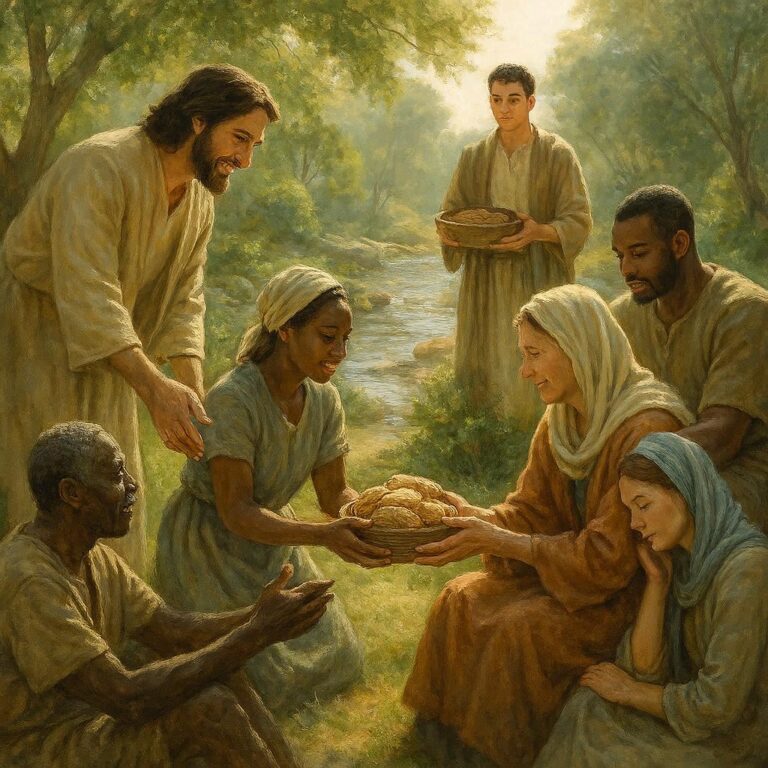
Grace. It’s a word woven into our language, from saying grace before a meal to describing a dancer’s movements. But within the pages of the Bible, “grace” carries a weight and depth that transcends these common uses. It is the very heartbeat of the Christian faith, the unexpected, revolutionary idea that changes everything about how we relate to God.
At its core, the biblical meaning of grace is unmerited favor. It is the free, spontaneous, and utterly generous gift of God’s love, kindness, and salvation to humanity, given not because of anything we have done, but despite what we have done. It is God giving us what we desperately need, rather than what we justly deserve.
This article will serve as your deep dive into this transformative concept. We’ll explore its definition from the original biblical languages, see it vividly portrayed in key stories, understand its profound implications for daily life, and distinguish it from related ideas like mercy and works. Our goal is to provide you with a clear, reliable, and thorough understanding of grace as presented in the Scriptures.

What Does “Grace” Mean in the Bible? A Definition from the Source
To grasp the biblical meaning of grace, we must go to the source text. In the Old Testament, the primary Hebrew word is “chen” (חֵן), which often refers to favor, acceptance, or charm. It appears in phrases like “find favor in the eyes of” someone. This favor is always granted; it cannot be demanded or earned.
In the New Testament, the Greek word is “charis” (χάρις). This is our foundational word. Its meanings include:
-
Favor, goodwill, loving-kindness.
-
A gift or benefit granted freely.
-
Thanks or gratitude (a response to a gift).
Theologically, “charis” encapsulates God’s disposition of generous, active love toward humanity. The apostle Paul, who wrote extensively on grace, defines it through contrast: “And if by grace, then it cannot be based on works; if it were, grace would no longer be grace” (Romans 11:6). This single verse establishes the non-negotiable foundation of grace: it is a gift, not a transaction.
Key Takeaway: Biblical grace is not a wage for good behavior. It is not a reward. It is a gift, initiated by God, driven by His love, and offered to the undeserving.
Grace vs. Mercy: Understanding the Crucial Difference
These two beautiful attributes of God are closely related but distinct. Understanding the difference clarifies the unique role of grace.
| Attribute | Simple Definition | Biblical Picture | Human Analogy |
|---|---|---|---|
| Mercy | Not getting the bad we do deserve. | A judge pardoning a guilty criminal, withholding the just punishment. | A parent not giving a time-out to a child who broke a rule. |
| Grace | Getting the good we do not deserve. | A judge not only pardoning the criminal but also adopting them into their family and giving them an inheritance. | A parent not only forgiving the child but also throwing them an unexpected party. |
Mercy takes away the negative penalty. Grace pours out positive blessing. As one memorable quote puts it: “Mercy is God not kicking us out of the garden. Grace is God inviting us back in and promising us a future.”
Grace on Display: Key Examples in the Bible
The concept of grace isn’t just a theological idea; it’s a story told through real lives. Here are pivotal moments where the biblical meaning of grace shines through.
1. The Story of Noah (Genesis 6:8)
Before the flood, the world was filled with corruption. The Bible makes a stunning statement: “But Noah found grace in the eyes of the Lord.” Noah wasn’t perfect, but he was faithful. God’s grace—His unmerited favor—was the reason Noah was chosen, warned, and saved. The ark itself is a profound symbol of grace: a God-provided refuge from deserved judgment.
2. The Calling of Abraham (Genesis 12:1-3)
God’s choice of Abram (later Abraham) was not based on Abram’s merit. God initiated a covenant, promising to make him a great nation and bless all peoples through him. This was pure, unilateral grace. Paul later highlights this: “So too, at the present time there is a remnant chosen by grace. And if by grace, then it cannot be based on works; if it were, grace would no longer be grace” (Romans 11:5-6). The entire story of Israel begins with an act of God’s unearned favor.
3. The Life of the Apostle Paul
Perhaps no individual demonstrates the transforming power of grace more than Paul. He was a persecutor of the early church, approving of Stephen’s death. Yet, on the road to Damascus, the risen Jesus appeared to him. Paul’s own testimony underscores grace:
“But for that very reason I was shown mercy so that in me, the worst of sinners, Christ Jesus might display his immense patience as an example for those who would believe in him and receive eternal life” (1 Timothy 1:16).
Paul’s life became a living testament that if grace could reach him, it could reach anyone.
The Ultimate Expression: Grace in the Person of Jesus Christ
All biblical examples of grace point toward its ultimate manifestation. The New Testament declares that Jesus Christ is grace incarnate.
“The Word became flesh and made his dwelling among us. We have seen his glory, the glory of the one and only Son, who came from the Father, full of grace and truth… Out of his fullness we have all received grace in place of grace already given. For the law was given through Moses; grace and truth came through Jesus Christ” (John 1:14, 16-17).
In Jesus, we see grace defined:
-
Unmerited Access: He welcomed sinners, tax collectors, and the outcast.
-
Unmerited Healing: He healed without demanding prior righteousness.
-
Unmerited Salvation: His death on the cross was the ultimate gift—taking the punishment for sin (mercy) and offering the righteousness of God (grace) to all who believe.
-
Unmerited Invitation: His resurrection offers new life, a gift received by faith alone.
The Transformative Power of Grace in a Believer’s Life
Understanding grace is not an academic exercise. It is meant to transform how we live. Here’s how the Bible describes this practical impact.
A. Grace for Salvation: The Foundation
This is the starting point. The Bible is unequivocal: salvation is a gift of grace, received through faith.
“For it is by grace you have been saved, through faith—and this is not from yourselves, it is the gift of God—not by works, so that no one can boast” (Ephesians 2:8-9).
Our eternal standing with God is not a trophy for good behavior but a medal placed around the neck of a rescued prisoner. It changes our entire posture from prideful earning to humble, grateful receiving.
B. Grace for Daily Living: Strength and Identity
Grace doesn’t end at salvation; it sustains us daily. Paul frequently spoke of grace as the power to live the Christian life.
“But he said to me, ‘My grace is sufficient for you, for my power is made perfect in weakness.’ Therefore I will boast all the more gladly about my weaknesses, so that Christ’s power may rest on me” (2 Corinthians 12:9).
This “sufficient grace” provides:
-
Strength in weakness.
-
Forgiveness when we fail.
-
A new identity: We are no longer defined by our past sins but as “accepted in the Beloved” (Ephesians 1:6, NKJV).
C. Grace for Others: The Overflow
True grace received must become grace extended. When we comprehend the depth of God’s unmerited favor toward us, it compels us to offer the same to others.
“Let your conversation be always full of grace, seasoned with salt, so that you may know how to answer everyone” (Colossians 4:6).
“Be kind and compassionate to one another, forgiving each other, just as in Christ God forgave you” (Ephesians 4:32).
A life marked by grace is characterized by forgiveness, patience, generosity, and a lack of judgmentalism, because we remember we live solely by the same gift.
Common Misunderstandings and Important Clarifications
The beauty of grace is often obscured by misconceptions. Let’s clarify a few.
1. Grace is Not a License to Sin
A common objection is that teaching grace leads to moral carelessness. The Bible powerfully refutes this.
“What shall we say, then? Shall we go on sinning so that grace may increase? By no means! We are those who have died to sin; how can we live in it any longer?” (Romans 6:1-2).
True grace, when understood, doesn’t encourage sin; it empowers us to overcome it. We are motivated by love and gratitude, not fear of punishment.
2. Grace and Obedience: The Right Relationship
Grace does not eliminate obedience; it re-frames it. We don’t obey to earn God’s love; we obey because we are already secure in His love (grace). Obedience becomes a joyful response, not a burdensome requirement. As Jesus said, “If you love me, keep my commands” (John 14:15). Love, fueled by grace, is the motive.
3. Grace is Free, But Not Cheap
Dietrich Bonhoeffer famously warned against “cheap grace”—”grace without discipleship, grace without the cross.” True, biblical grace cost God everything—the life of His Son. While it is free to us, it was infinitely costly to Him. Therefore, it calls for a whole-life response of faith, commitment, and worship.
Important Note for Readers: If the concept of grace feels foreign or too good to be true, you are touching the very scandal of it. It confronts our deep-seated belief that we must earn our way. The invitation is to simply receive it. As the hymn says, “Amazing grace, how sweet the sound, that saved a wretch like me.”
Conclusion: Embracing the Gift
The biblical meaning of grace is the stunning narrative of a good God reaching down to rescue flawed humanity. It is unmerited favor, demonstrated in stories from Noah to Paul and ultimately in Jesus Christ. This grace saves us, sustains us daily, and shapes us into people who extend that same kindness to a hurting world. It is not a license to sin but the very power to live a new life. In the end, grace is not just a doctrine; it is the foundation of hope, the source of freedom, and the most profound expression of love in the universe.
Frequently Asked Questions (FAQ)
Q: Can I lose God’s grace?
A: The consistent biblical witness is that salvation by grace is secure because it depends on God’s faithfulness, not our own. As Romans 8:38-39 states, nothing can separate us from God’s love in Christ. Grace is a sustained gift, not a temporary loan.
Q: How do I receive this grace?
A: The Bible presents it as a gift received through faith—a trusting turn from relying on oneself to relying on Jesus Christ and His finished work. It involves acknowledging our need and accepting what God offers. As Acts 16:31 says, “Believe in the Lord Jesus, and you will be saved.”
Q: If it’s all grace, why should I pray, read the Bible, or go to church?
A: These are not duties to earn favor but means of growing in grace. They are how we commune with the God who loves us, understand our gift more deeply, and connect with others who have received it. They are the natural responses of a grateful heart.
Q: Does God’s grace cover all sins, even really bad ones?
A: Yes. The blood of Jesus Christ is presented as sufficient to cleanse from all unrighteousness (1 John 1:9). The examples of Paul (a persecutor) and the thief on the cross demonstrate that no sin is beyond the reach of God’s redemptive grace when there is repentance and faith.
Additional Resources for Deeper Study
To continue exploring the depth of God’s grace, consider studying these books of the Bible with a good commentary or study guide:
-
The Gospel of Luke: Often called the “Gospel of Grace,” highlighting Jesus’ love for the outcast.
-
The Letter to the Romans: Paul’s most systematic explanation of grace, law, and salvation.
-
The Letter to the Ephesians: Explores the glorious riches of God’s grace and our new identity in Christ.
For a trusted online resource with free Bible translations, commentaries, and articles, visit: BibleGateway.com
*Disclaimer: This article, written on January 15, 2026, is intended for informational and spiritual guidance purposes. It is based on traditional Protestant biblical interpretation and is not intended as exhaustive theological counsel. For personal spiritual matters, please consult with a local pastor or faith leader.