Have you ever noticed how often the number six appears in the Bible? From the days of creation to the dimensions of a giant’s statue, this number surfaces with intriguing consistency. But what does it truly signify? The biblical meaning of number 6 is rich, complex, and deeply symbolic, pointing primarily to human imperfection, labor, and our inherent need for divine grace. It’s a number that, in Scripture, often stands just one short of the number of completion and perfection—seven.
In this guide, we’ll journey together through the pages of the Bible to uncover the layers of meaning behind the number six. We’ll explore its first and most foundational appearance, trace its path through historical narratives and prophetic books, and understand its powerful theological implications. This isn’t about numerology in a mystical sense, but about discerning the consistent patterns God has woven into His Word. By the end, you’ll have a clear, reliable understanding of why this number matters and how it points us to a fundamental truth about ourselves and our Creator.
The Foundational Symbolism: Six as the Number of Man
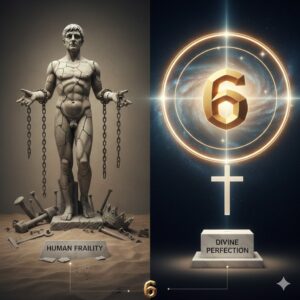
At its core, the biblical meaning of number 6 is inextricably linked to humanity. It represents what is created, earthly, and incomplete. This symbolism is established right at the beginning of the Bible and echoed throughout its narrative.
The Sixth Day of Creation: The Pinnacle and the Pattern
The most pivotal introduction of the number six is found in Genesis. God’s creative work unfolded over six days, culminating on the sixth day with His most significant earthly creation.
Genesis 1:31 (ESV): “And God saw everything that he had made, and behold, it was very good. And there was evening and there was morning, the sixth day.”
On this day, God created land animals and, finally, humankind in His own image. Humanity was the crown of creation, yet the pattern was set: six days of work, followed by a seventh day of rest. Here, six is associated with the peak of creative labor and the creation of mankind. It signifies a completed cycle of work, but one that immediately invites and requires the rest and completeness found in the seventh day. From the very start, six is good—but it is inherently linked to what comes next.
Human Labor and Imperfection
Following the pattern of creation, the Law given to Israel reinforced the connection between six and human labor. The commandment for the Sabbath is built upon a six-and-one rhythm.
Exodus 20:9-10 (ESV): “Six days you shall labor, and do all your work, but the seventh day is a Sabbath to the Lord your God.”
Six days are for human effort, productivity, and toil. It is the sphere of man’s activity. The seventh day, however, is sanctified, set apart for God. This establishes a powerful spiritual principle: human effort (six) finds its true meaning, rest, and fulfillment only in God (seven). On its own, human effort is incomplete. The number six, therefore, becomes a symbol of our limits, our need for cessation, and our dependence on God to bring true completion.
Key Appearances of the Number 6 in Biblical Narrative
The symbolism of six weaves through specific stories and measurements in the Bible, reinforcing its themes of human weakness, opposition to God, and incompleteness.
Goliath’s Imposing but Fallible Stature
The Philistine giant Goliath, the embodiment of human strength and defiance against God, is described with a focus on the number six.
1 Samuel 17:4-7 (ESV) details his armor: his height was six cubits and a span, he had six pieces of armor (spear, sword, javelin, helmet, coat of mail, leg greaves), and the head of his spear weighed six hundred shekels of iron.
Goliath represents the pinnacle of human might and intimidation. Yet, his association with the number six is a divine clue to his true nature: he is formidable but fundamentally fallible and incomplete. His defeat by David, who relied on God’s strength, powerfully illustrates that the power represented by six (human strength) cannot stand against the power of the living God.
Nebuchadnezzar’s Golden Image: Human Arrogance
In the book of Daniel, King Nebuchadnezzar erects a giant golden image demanding universal worship. The dimensions of this idol are telling.
Daniel 3:1 (ESV): “King Nebuchadnezzar made an image of gold, whose height was sixty cubits and its breadth six cubits.”
The emphasis on six (sixty and six) here symbolizes the image’s origin in human authority and its opposition to divine command. It was an expression of human pride, a man-made object demanding worship that belonged only to God. The story’s climax—where three men who refuse to worship are protected by God—shows the ultimate futility of what “six” represents when it sets itself up against Heaven.
A Table of Symbolic Appearances
| Reference | Event / Object | Significance of Six |
|---|---|---|
| Genesis 1:31 | Sixth Day of Creation | Completion of God’s creative work; creation of humanity. |
| Exodus 20:9 | Six Days of Labor | The sphere of human effort and toil before divinely mandated rest. |
| 1 Samuel 17 | Goliath’s Measurements | Symbolizes formidable but ultimately fallible human strength. |
| Daniel 3:1 | Nebuchadnezzar’s Image | Represents human arrogance, idolatry, and systems opposed to God. |
| Revelation 13:18 | The Number of the Beast | The ultimate expression of flawed, counterfeit, and rebellious humanity. |
The Culmination: Six Hundred Sixty-Six and the Number of the Beast
The most famous and sobering use of the number six in the Bible is found in the book of Revelation. Here, the symbolism reaches its peak.
Revelation 13:18 (ESV): “This calls for wisdom: let the one who has understanding calculate the number of the beast, for it is the number of a man, and his number is 666.”
This verse is the ultimate key to understanding the biblical meaning of number 6. The triple repetition (6-6-6) intensifies its meaning. It is emphatically “the number of a man.”
-
A Trinity of Imperfection: While God is perfect and holy (often associated with the number seven), the beast’s number is a cruel parody—a false trinity of incompleteness. It represents a system or person that claims ultimate authority (like God) but is utterly and completely human, flawed, and opposed to God.
-
The Height of Human Rebellion: It signifies the pinnacle of human arrogance, a world system built solely on human power, wisdom, and rebellion, utterly devoid of God. It is “six” magnified to its logical, and terrifying, conclusion.
-
Always Falling Short: No matter how powerful or persuasive, what is represented by 666 will always fall devastatingly short of the perfection, completeness, and salvation found in Christ. It is the antithesis of divine grace.
Important Note for Readers: Interpretations of the identity of the “beast” vary widely. The crucial theological point is not speculative identification, but understanding the number’s symbolism: it represents the ultimate failure and rebellion of humanity apart from God.
The Contrast: From the Incompleteness of Six to the Perfection of Seven
To fully grasp the meaning of six, we must see it in contrast with the number seven in the Bible. Seven is the number of divine perfection, completion, and covenant.
-
Creation: Six days of work, one day of rest and blessing (Genesis 2:2-3).
-
The Sabbath Cycle: Six days for labor, the seventh for holy rest (Exodus 20:9-11).
-
Forgiveness: Jesus instructs Peter to forgive not just seven times, but “seventy-seven times” (Matthew 18:22), pointing to limitless, perfect forgiveness.
-
Revelation: The book is structured around sevens: seven churches, seals, trumpets, and bowls, representing God’s complete and perfect plan.
Six, therefore, is not evil in itself—God declared the sixth-day creation “very good.” But it is inherently incomplete. It represents the created order and human effort, which are beautiful and purposeful but are designed to find their rest, fulfillment, and perfection only in God (represented by seven). The struggle between “six” and “seven” is the story of humanity trying to find wholeness on its own terms, versus accepting the wholeness offered by grace.
A Helpful List: The Spiritual Journey from Six to Seven
-
Acknowledgment: Recognize the “six” in our lives—our human limitations, failures, and relentless toil for meaning.
-
Rest: Embrace the divine invitation to cease from our labors and enter God’s rest (Hebrews 4:9-10).
-
Completion: Find true perfection and wholeness not in our own achievements (6), but in the finished work of Christ, our perfect Sabbath rest.
Conclusion
The biblical meaning of number 6 is a profound thread running through Scripture, symbolizing humanity, labor, and imperfection. Established at Creation and contrasted with divine perfection, it reveals our inherent need for God’s grace and completion. From Goliath’s strength to the Beast’s rebellion, six marks what is formidable but ultimately fallible without God. Ultimately, this number points us to our need for the One who brings true rest and wholeness, inviting us to find our completion not in human effort, but in divine grace.
Frequently Asked Questions (FAQ)
Q: Is the number 6 considered evil or unlucky in the Bible?
A: Not inherently. In its primary symbolism, six represents humanity and human labor, which God declared “very good” at creation. Its negative connotations arise when what is human (6) sets itself up in opposition or as a substitute for what is divine (7), as seen in idolatry or the number of the Beast.
Q: What is the difference between the numbers 6 and 666 in biblical interpretation?
A: Six establishes the core concept of human incompleteness. 666, the “number of the beast,” is an intense, triple repetition of this concept. It represents the ultimate culmination of human systems, power, and rebellion against God—a kind of perfect or complete imperfection, a satanic parody of the Holy Trinity.
Q: Should Christians look for the number 6 in everyday life?
A: The purpose of biblical numerology is to understand deeper spiritual themes in Scripture, not to find hidden codes or omens in daily life. The focus should be on the theological principle: recognizing the insufficiency of human effort and our need for God’s grace and completion in Christ.
Q: How does the number 6 relate to Jesus Christ?
A: Interestingly, Jesus entered the “six” of human experience—He lived a fully human life, experienced toil, and was crucified. However, His resurrection on the first day of the week (the day after the Sabbath, pointing to a new creation) shattered the cycle of incompleteness. In Him, human nature (6) is redeemed and brought to perfect fulfillment (7).