If you’ve ever wondered about the biblical meaning of “Zoe,” you’ve touched on one of the most profound concepts in the entire New Testament. This isn’t just a word for existence; it’s a key that unlocks the heart of Christian faith. Far from being a simple term, “Zoe” represents a specific, powerful, and divine kind of life offered to believers. This guide will take you on a deep dive into its origins, its contrast with other words for life, and its life-changing implications for you today.
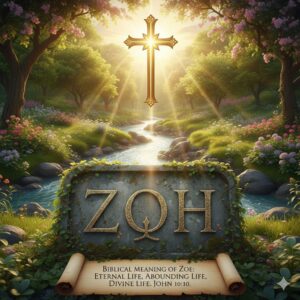
Table of Contents
ToggleWhat is the Origin and Definition of Zoe?
“Zoe” (ζωή) is a Greek word that appears over 130 times in the New Testament. While it is translated into English as “life,” its meaning in the biblical context is infinitely richer. In ancient Greek thought, zoe often referred to the very principle of life, the animating force within living creatures. However, when the biblical authors, inspired by the Holy Spirit, adopted this word, they infused it with revolutionary theological depth.
In the Bible, Zoe is the God-kind of life. It refers to the uncreated, eternal, and divine life that originates in God Himself. It’s not merely biological existence or the span of one’s years; it is a quality of life that is inseparable from a relationship with the Divine.
“In him was life [zoe], and that life [zoe] was the light of all mankind.” – John 1:4
This verse from the Gospel of John sets the stage perfectly. The life (zoe) present in Jesus—the Word—is a luminous, powerful force meant for humanity. This tells us from the outset that Zoe is found in a person, not a philosophy.
Zoe vs. Bios: A Crucial Biblical Distinction
To truly grasp the meaning of Zoe, we must contrast it with another Greek word for life: Bios (βίος). This distinction is critical and often lost in English translations.
| Feature | Bios (βίος) | Zoe (ζωή) |
|---|---|---|
| Core Meaning | Biological life, lifespan, manner of living, material resources. | The essential, spiritual, and eternal life principle. |
| Scope | Temporal, earthly, and physical. | Eternal, spiritual, and divine. |
| Source | Natural birth and sustenance. | God alone, through spiritual rebirth. |
| Focus | The duration and means of life. | The quality and essence of life. |
| Biblical Example | “The younger son… wasted his property in reckless living [bios].” (Luke 15:12-13) | “I am the way, the truth, and the life [zoe].” (John 14:6) |
As you can see, Bios concerns the things of this life—our daily affairs, our possessions, our physical duration. Zoe, in stunning contrast, is the very life of God. A person can have a full Bios (a long, resource-rich earthly life) yet completely lack Zoe (spiritual, eternal life).
The Theology of Zoe in the New Testament
The concept of Zoe forms the backbone of New Testament theology, especially in the writings of John and Paul.
Zoe in the Gospel of John
John uses zoe more than any other New Testament writer. For him, Zoe is central to Jesus’ identity and mission.
-
Jesus as the Source: Jesus doesn’t just give Zoe; He is Zoe. He declares Himself “the bread of life [zoe]” (John 6:35) and “the resurrection and the life [zoe]” (John 11:25).
-
The Purpose of His Coming: “The thief comes only to steal and kill and destroy; I have come that they may have life [zoe], and have it to the full.” (John 10:10). This “abundant” or “full” life is Zoe—a superabundant, overflowing measure of God’s own life.
-
Received Through Belief: John explicitly states the purpose of his Gospel: “But these are written that you may believe that Jesus is the Messiah, the Son of God, and that by believing you may have life [zoe] in his name.” (John 20:31). Zoe is accessed through faith.
Zoe in the Pauline Epistles
Paul expands on the practical and transformative implications of receiving Zoe.
-
A New State of Being: Before faith, we were “dead in trespasses and sins” (Ephesians 2:1). Receiving Zoe is a resurrection from spiritual death. “When you were dead in your sins… God made you alive [zoe] with Christ.” (Colossians 2:13).
-
Life in the Spirit: For Paul, Zoe is now the governing principle of the believer. “For the law of the Spirit of life [zoe] has set you free in Christ Jesus from the law of sin and death.” (Romans 8:2). We now live by this new, powerful “law”—the dynamic force of God’s life.
-
A Present Possession with Future Fulfillment: Believers have eternal life (Zoe) now (John 3:36, 5:24), yet we also await its ultimate consummation in the future resurrection.
Important Note for Readers: Don’t fall into the trap of thinking “eternal life” (zoe aionios) only means “life that lasts forever.” While it is unending, its primary emphasis is on a new quality of life—God’s life—that we enter into now and that, by its nature, cannot end. It’s a kind of life, not just a length of time.
How to Receive and Walk in Zoe
Understanding Zoe is wonderful, but the Bible presents it as a practical, accessible reality. Here is the clear pathway:
-
Acknowledge the Need: Recognize that natural life (Bios) is insufficient and that spiritual separation from God (spiritual death) is our default state.
-
Believe in the Source: Zoe is found exclusively in Jesus Christ. It comes through believing in His identity as the Son of God and His finished work on the cross and in resurrection. “Whoever has the Son has life [zoe]; whoever does not have the Son of God does not have life [zoe].” (1 John 5:12).
-
Receive by Faith: It is a gift (Romans 6:23), not a wage. It is received by grace through faith (Ephesians 2:8).
-
Abide in the Vine: Walking in Zoe is a relational, ongoing process. Jesus uses the metaphor of the vine and branches: “Remain in me, as I also remain in you… for apart from me you can do nothing.” (John 15:4-5). This “abiding”—through prayer, Scripture, and obedience—is how the flow of Zoe is sustained in our daily lives.
Practical Signs of Zoe in a Believer’s Life
How do you know this divine life is at work? It manifests in tangible ways:
-
Freedom from Sin’s Dominion: While sin remains a struggle, its ultimate power over you is broken (Romans 6:11-14).
-
Transformation of Character: The “fruit of the Spirit” (love, joy, peace, etc.) begins to grow naturally (Galatians 5:22-23).
-
A New Perspective: Your values and desires gradually align with God’s (2 Corinthians 5:17).
-
Victory Over Fear: Even the fear of death loses its sting, because Zoe is indestructible (1 Corinthians 15:55-57).
Zoe in the Old Testament: The Foundation
While the term zoe is Greek, the concept is deeply rooted in the Hebrew Scriptures. The Old Testament lays the groundwork through themes that find their fulfillment in Christ.
-
The Tree of Life: In Eden, the Tree of Life (Genesis 2:9) symbolized access to unending life in God’s presence. After the Fall, humanity was barred from it. The entire biblical story can be seen as God’s mission to restore access to this “Tree,” which Revelation reveals is found in Christ and available to the redeemed (Revelation 2:7, 22:2,14).
-
Life in the Covenant: God’s covenant relationship with Israel was a gift of life (Deuteronomy 30:15-20). True life was found in faithful communion with Yahweh.
-
Prophetic Promises: Ezekiel’s vision of dry bones coming to life (Ezekiel 37) and the promise of a new heart and new spirit (Ezekiel 36:26) pointed forward to the Zoe that would be poured out in the New Covenant.
Common Questions and Misconceptions About Zoe
Misconception 1: Zoe means a problem-free, prosperous earthly life.
Clarification: Abundant life (John 10:10) is not an abundance of Bios things. It’s the superabundance of God’s presence, peace, and power within us, which can sustain us even amidst earthly trials (John 16:33).
Misconception 2: Eternal life only begins when we die.
Clarification: This is a major misunderstanding. Eternal life (Zoe) is a present-tense possession for the believer. “Whoever believes has eternal life” (John 6:47, emphasis added). Physical death is merely a transition into its unrestricted fullness.
Misconception 3: Zoe is an impersonal force or energy.
Clarification: Biblically, Zoe is inextricably linked to a personal God. It is the life that flows from the Father, through the Son, by the Holy Spirit. It is relational at its core.
Conclusion: The Invitation to Zoe
The biblical meaning of Zoe is the stunning truth that the eternal, uncreated life of God Himself is offered to us as a gift through Jesus Christ. It is not an upgrade to our earthly existence (Bios) but a whole new dimension of living—a resurrection life that begins now and triumphs forever. It transforms our identity, empowers our present, and secures our future. The entire biblical narrative points to this profound reality: God’s ultimate desire is not just to save us from death, but to bring us into His own life.
FAQ on the Biblical Meaning of Zoe
Q: Is the name “Zoe” in the Bible?
A: The word zoe (life) appears frequently, but it is not used as a proper name for a person in the original biblical texts. Its use as a name is a later development derived from the beautiful meaning of the word.
Q: Can a person have Bios without Zoe?
A: Yes, absolutely. This describes the state of every person before receiving Christ. They are fully alive physically (Bios) but spiritually separated from God, lacking His eternal life (Zoe). This is the state the Bible calls being “spiritually dead” (Ephesians 2:1).
Q: How is Zoe different from “Psuche” (soul)?
A: Psuche (ψυχή) typically refers to the seat of personality, emotions, and will—the individual self or soul. Zoe is the animating, divine life principle that can renew and empower the psuche. Jesus said whoever would save his psuche (self-life) will lose it, but whoever loses it for His sake will find zoe (Matthew 16:25).
Q: Does receiving Zoe mean I will never sin again?
A: No. The presence of Zoe gives you a new nature and breaks sin’s dominion, but the presence of sin remains as we live in a fallen world. The journey of the Christian life is the process of allowing Zoe to permeate and transform every area of our being, including overcoming sinful habits (Romans 6:12-14, Galatians 5:16-17).
Additional Resource
For a deeper lexical study of the Greek words for life, we recommend exploring the entry for zōē in the Blue Letter Bible Lexicon. This tool allows you to see every occurrence of the word in Scripture and its context: Blue Letter Bible – Strong’s G2222