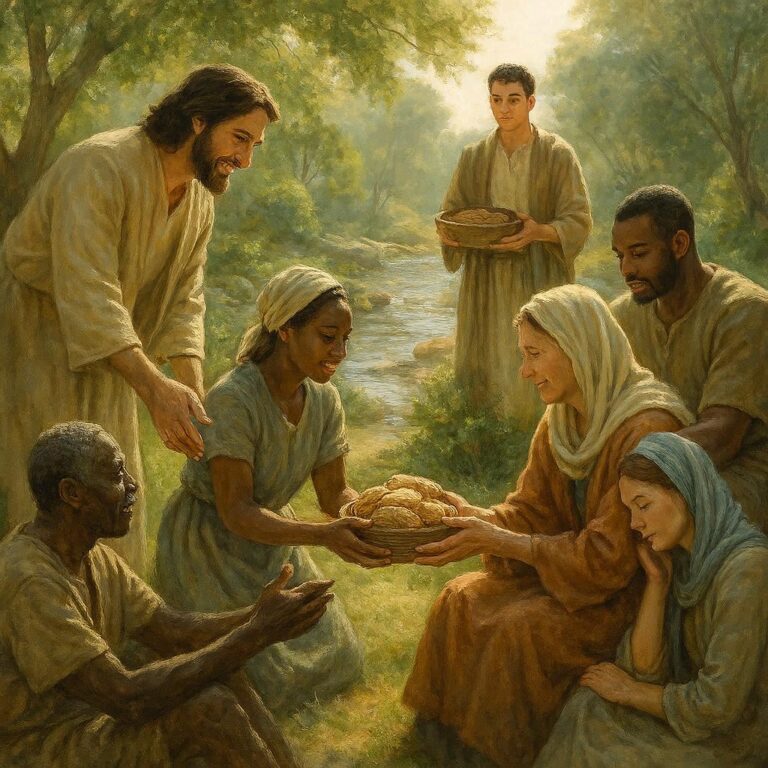
If you’ve ever attended a church service or spent time in Jewish communities, you’ve likely heard the word “Shalom.” It’s a common greeting, a heartfelt farewell, and a beautiful sentiment. Most translations render it simply as “peace.” But if we stop there, we miss the profound, vibrant, and revolutionary depth of what Shalom truly means in the biblical context.
The biblical meaning of Shalom is a rich, multi-dimensional concept that goes far beyond the absence of conflict or a quiet inner feeling. It is nothing less than the dream of God for His creation—a state of universal flourishing, wholeness, completeness, harmony, and prosperity. It is the way things are supposed to be.
This article is a comprehensive guide to understanding this cornerstone biblical idea. We’ll unpack its Hebrew roots, see it woven through the narrative of Scripture, and discover how this ancient vision of total well-being is deeply relevant to our lives today.
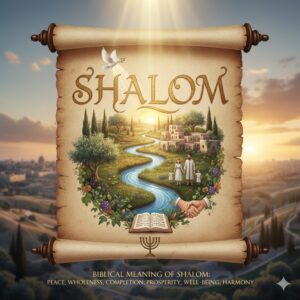
Understanding the Hebrew Root: What Does Shalom Really Mean?
To grasp the biblical meaning of Shalom, we must start with its original language. Hebrew words are built on root systems, typically three consonants, that carry a core idea. The root of Shalom (שָׁלוֹם) is שׁלם (Sh-L-M). This root carries the foundational meaning of completeness, wholeness, soundness, and fulfillment.
Think of it like a perfectly intact vessel, a finished project, a debt fully paid, or a relationship made right. This root appears in other related words:
-
Shalem (שָׁלֵם): Complete, safe, peaceful.
-
Shillum (שִׁלֻּם): Full repayment, retribution.
-
Tashlum (תַּשְׁלוּם): Complete payment.
From this, we see that Shalom is not a passive state but a dynamic reality of everything being in its right place, fully integrated, and functioning as intended.
Shalom vs. Common Western Understanding of “Peace”
A helpful way to see the difference is through a comparison:
| Biblical Concept of Shalom | Common Western Concept of “Peace” |
|---|---|
| Active, dynamic wholeness | Often a passive absence |
| Comprehensive: relational, physical, spiritual, communal, environmental | Primarily internal or political |
| Positive harmony and prosperity | Neutral state of non-conflict |
| Rooted in justice, righteousness, and right relationships (שלם) | Can be a temporary truce or detachment |
| The presence of good in all areas | The absence of bad (like war or anxiety) |
As theologian Cornelius Plantinga Jr. famously described it, Shalom is “the webbing together of God, humans, and all creation in justice, fulfillment, and delight.” It’s the shalom of a flourishing garden, a healthy community, a forgiven heart, and a restored relationship.
Shalom Through the Lens of Scripture: A Narrative Journey
The concept of Shalom isn’t confined to a few “peace” verses. It is the thematic heartbeat of the Bible’s story—from creation to fall, and from redemption to final restoration.
Shalom in the Beginning: The Garden of Eden
The opening chapters of Genesis paint a perfect picture of Shalom.
-
Harmony with God: Adam and Eve walked in intimate fellowship with God (Genesis 3:8).
-
Harmony within Self: They were unashamed (Genesis 2:25).
-
Harmony with Each Other: The man and woman were united as “one flesh” (Genesis 2:24).
-
Harmony with Creation: They were placed in a lush garden to care for it, and it provided for them abundantly (Genesis 2:15-16).
This was the Shalom of God’s original design—a web of life-giving, joyful relationships.
The Shattering of Shalom: The Fall
Sin, at its core, is the rupture of Shalom. The disobedience in Genesis 3 shattered every dimension of this wholeness:
-
Broken relationship with God (hiding, fear).
-
Broken relationship within self (shame, blame).
-
Broken relationship between people (Adam blames Eve).
-
Broken relationship with creation (thorns, thistles, painful toil).
The rest of the biblical story is about God’s mission to restore Shalom.
Shalom as Covenant Blessing and Greeting
Throughout the Old Testament, Shalom appears as both a blessing and a common greeting, embodying a hope for comprehensive well-being.
-
Priestly Blessing: “The LORD… give you peace [Shalom]” (Numbers 6:26). This was a blessing of God’s favor and protective wholeness.
-
Common Greeting: To say “Shalom” (or “Shalom alechem” – peace be upon you) was to speak a blessing of health, prosperity, and safety over someone (Judges 19:20, 1 Samuel 25:6).
-
Covenant Promise: God promises Shalom to His people when they walk in His ways, linking it directly to safety, fruitfulness, and rest from enemies (Leviticus 26:6, 1 Kings 4:25).
The Prophetic Vision: Shalom as Future Restoration
The prophets, especially after the exile, looked forward to a future, Messianic Shalom that God Himself would establish.
-
Isaiah’s Prince of Peace: “For to us a child is born… And he will be called… Prince of Peace [Shalom]” (Isaiah 9:6). His reign would have no end, establishing eternal justice and righteousness—the pillars of true Shalom.
-
The Covenant of Peace: “I will make a covenant of peace [Shalom] with them; it will be an everlasting covenant” (Ezekiel 37:26).
-
Wholeness for Creation: The prophetic vision includes the healing of the land, the end of violence, and even harmony within the animal kingdom (Isaiah 11:6-9, 55:12). This is Shalom on a cosmic scale.
Jesus Christ: The Embodiment and Bringer of Shalom
The New Testament reveals Jesus as the ultimate fulfillment of the prophetic promises of Shalom.
Jesus as the Prince of Shalom
He is the Isaiah 9:6 child born to be the “Prince of Shalom.” His entire mission was one of restoration—healing the sick (physical wholeness), forgiving sinners (relational and spiritual wholeness), and reconciling people to God and each other.
The “Peace” Jesus Offers
Jesus redefines peace in His own terms: “Peace I leave with you; my peace I give you. I do not give to you as the world gives” (John 14:27). The world’s peace is fragile and circumstantial. The Shalom of Christ is a deep, foundational wholeness rooted in reconciliation with God, which holds firm even in trouble (John 16:33).
Breaking Down the Walls of Hostility
The Apostle Paul explicitly links Jesus to Shalom by calling Him “our peace [Shalom]” (Ephesians 2:14). Paul explains that Jesus, through the cross, destroyed the barrier of hostility between Jews and Gentiles, creating “one new humanity” out of the two, thus making peace (Ephesians 2:15). This is Shalom in action—the restoration of fractured human community.
Living Out Shalom: A Practical Guide for Today
Understanding Shalom is one thing; participating in it is another. How do we live as agents of God’s wholeness in a broken world?
1. Pursue Shalom Within: Spiritual and Emotional Wholeness
-
Be Reconciled to God: This is the foundation. True Shalom starts with peace with God through Jesus Christ (Romans 5:1).
-
Renew Your Mind: Allow God’s truth to heal fractured thinking and inner turmoil (Romans 12:2, Philippians 4:6-7).
-
Practice Self-Care as Stewardship: Caring for your physical, mental, and emotional health is part of honoring the “vessel” God has given you.
2. Pursue Shalom in Relationships: Relational Wholeness
-
Forgive and Seek Forgiveness: Actively mend broken relationships where possible (Matthew 5:23-24).
-
Be a Bridge-Builder: Look for ways to foster understanding and unity in your family, workplace, and community.
-
Speak Words of Peace: Use your words to bless, encourage, and heal, not to tear down (James 3:18).
3. Pursue Shalom in the World: Communal and Social Wholeness
-
Seek the Peace of Your City: Jeremiah 29:7 instructs exiles to “seek the peace [Shalom] and prosperity of the city” where they live. This means being an active, contributing citizen who prays for and works toward the common good.
-
Act Justly and Love Mercy: Since Shalom is built on justice, stand against systems that create poverty, oppression, and inequality (Micah 6:8).
-
Care for Creation: Practice sustainability and care for the environment, acknowledging our role as stewards of God’s world.
Important Note for Readers: Pursuing Shalom is not the same as pursuing a conflict-free life. Jesus, the Prince of Peace, faced intense conflict against injustice and hypocrisy. Sometimes, creating true wholeness requires confronting what is broken. It is the pursuit of rightness, not merely quietness.
The Ultimate Hope: The Final Restoration of All Things
The biblical story ends where it began, but on a grander scale. The vision of Revelation is one of total Shalom restored.
-
A New Heaven and a New Earth (Revelation 21:1) – The entire cosmos is healed.
-
God dwelling with humanity (Revelation 21:3) – Perfect harmony with God.
-
No more death, mourning, crying, or pain (Revelation 21:4) – Perfect wholeness within ourselves and our community.
-
The tree of life, whose leaves are “for the healing of the nations” (Revelation 22:2) – The ongoing, eternal state of Shalom for all peoples.
This is our ultimate hope. Our efforts to live out Shalom now are signposts pointing toward that complete future reality.
Conclusion
The biblical meaning of Shalom is the beautiful, complex vision of God’s perfect wholeness. It begins with the Hebrew concept of completeness and weaves through Scripture as the story of rupture and restoration. Jesus Christ is the personal embodiment and giver of this Shalom, reconciling us to God and each other. We are called to actively pursue this wholeness within ourselves, in our relationships, and in our world, as we await its ultimate fulfillment in the new creation.
Frequently Asked Questions (FAQ)
Q: Is saying “Shalom” just a religious greeting?
A: While it is a common greeting, it carries deep meaning. When you say “Shalom,” you are essentially speaking a blessing of comprehensive well-being—health, safety, peace, and wholeness—over another person.
Q: Can someone have “peace” without having biblical Shalom?
A: Yes, one can experience a temporary sense of calm, absence of conflict, or inner tranquility (what the world calls peace) without the foundational wholeness of biblical Shalom. Biblical Shalom is deeper, rooted in being rightly related to God, which provides a lasting stability that external circumstances cannot shake.
Q: How is Shalom related to justice?
A: They are inseparable. True Shalom cannot exist where injustice prevails. Justice (making things right) is a prerequisite for Shalom (things being whole). The prophets consistently link the two, condemning those who cry “Peace, peace” when there is no justice (Jeremiah 6:14).
Q: What’s a simple way to start living as a peacemaker (Shalom-bringer) today?
A: Start in your immediate sphere. Intentionally mend one strained relationship, advocate for one person who is being treated unfairly, or take one step to care for your own physical/emotional health as an act of stewardship. Look for a single “rupture” and seek to restore it.