The name Rachel echoes through the pages of the Bible with a resonance that is both tender and powerful. More than just a historical figure, Rachel’s story is a deeply human tapestry woven with threads of passionate love, heartbreaking barrenness, fierce rivalry, and ultimate tragedy. Her legacy, however, extends far beyond her lifetime, shaping the destiny of a nation and offering enduring symbols of God’s compassion. Understanding the biblical meaning of Rachel is to explore the complexities of faith, family, and divine promise through the eyes of one of Scripture’s most beloved and poignant matriarchs.
This guide will journey through Rachel’s narrative, unpack the layers of her character, and illuminate the profound spiritual and symbolic significance she holds within the biblical tradition and for readers today.
Who Was Rachel in the Bible? A Story of Love and Longing
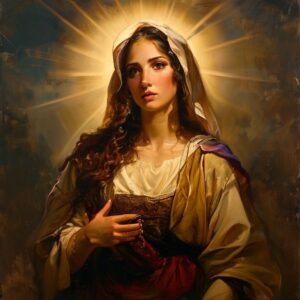
Rachel is a central matriarch in the Book of Genesis, the beloved wife of Jacob and the mother of two of the twelve founders of the tribes of Israel: Joseph and Benjamin. Her story, found in Genesis 29-35, is instantly compelling, marked by dramatic contrasts between deep love and intense personal struggle.
Key Aspects of Rachel’s Identity:
-
Daughter: Youngest daughter of Laban, sister to Leah.
-
Shepherdess: She was tending her father’s flock when Jacob first saw her (Genesis 29:9).
-
Beloved Wife: Jacob loved her deeply from the moment they met.
-
Mother: Of Joseph and Benjamin.
-
Matriarch: One of the four mothers of Israel (along with Sarah, Rebekah, and Leah).
Her narrative begins with one of the most famous meetings in the Bible. Jacob, fleeing from his brother Esau, arrives in Paddan Aram and sees Rachel at a well. The text emphasizes her beauty—“Rachel was lovely in form, and beautiful” (Genesis 29:17)—and Jacob is immediately smitten. He single-handedly rolls away the large stone covering the well for her, a symbolic act of devotion, and weeps for joy. He agrees to work seven years for her father, Laban, to earn her hand in marriage, and those years “seemed like only a few days to him because of his love for her” (Genesis 29:20).
However, her story is also defined by a profound and painful struggle: her initial barrenness. In a culture where a woman’s value was closely tied to bearing children, this was a source of deep anguish and becomes a central theme in her life.
Rachel’s Story: A Chapter-by-Chapter Journey Through Genesis
Rachel’s life unfolds across several key chapters, each revealing new dimensions of her character and her role in the larger story of God’s covenant.
Genesis 29: The Wedding of Deception
After working seven years, Jacob’s wedding day arrives. In a cruel twist, Laban substitutes Rachel’s older sister, Leah, under the wedding veil. Jacob only discovers the deception the next morning. Confronted, Laban cites local custom and demands Jacob complete the bridal week with Leah before he can marry Rachel—in exchange for another seven years of labor. Jacob agrees, and he marries Rachel a week later. This event sets the stage for a lifetime of rivalry between the two sisters.
Genesis 30: The Struggle for Children and the Battle of Wombs
With Leah bearing children in rapid succession, Rachel’s desperation grows. She cries out to Jacob, “Give me children, or I’ll die!” (Genesis 30:1). This raw, emotional plea reveals her deep suffering. The rivalry escalates into a contest involving their maidservants, Bilhah (Rachel’s) and Zilpah (Leah’s), whom they give to Jacob as surrogate wives to build their families. Finally, after Leah has borne six sons and a daughter, “God remembered Rachel; he listened to her and enabled her to conceive” (Genesis 30:22). She gives birth to Joseph, whose name means “may he add,” expressing her hope for another son.
Genesis 31-35: Flight, Theft, and Tragedy
Jacob decides to return to Canaan. Rachel, in a secretive and defiant act, steals her father’s household gods (teraphim). When Laban pursues them to search for his idols, Rachel hides them by sitting on them and claiming she cannot rise due to her menstrual period. This act shows a cunning, perhaps desperate, side to her character.
The climax of Rachel’s story comes in Genesis 35. As the family travels, she goes into labor with her second son. It is a difficult labor, and she dies shortly after giving birth. With her last breath, she names him Ben-Oni, meaning “son of my trouble.” But Jacob, refusing this name of sorrow, renames him Benjamin, “son of my right hand” (implying strength and favor). Rachel is buried on the road to Ephrath (Bethlehem), not in the family tomb at Machpelah, a solitary and haunting detail.
The Character of Rachel: Strengths, Flaws, and Humanity
Rachel is portrayed with remarkable psychological realism. She is not a one-dimensional saint but a fully realized woman with admirable qualities and human flaws.
Strengths and Virtues:
-
Beloved and Loving: She inspired legendary devotion in Jacob, a testament to her character beyond her beauty.
-
Perseverance in Prayer: Her eventual motherhood is framed as God answering her heartfelt prayers.
-
Initiative: She took action in her difficult situation, albeit sometimes in flawed ways.
Human Flaws and Struggles:
-
Envy and Rivalry: Her relationship with Leah was poisoned by competition for Jacob’s love and for children.
-
Desperation and Impatience: Her demand to Jacob (“Give me children!”) showed a momentary lapse in recognizing God’s sovereignty.
-
Deception: The theft of the household gods was an act of dishonesty and possibly clinging to old superstitions.
This complex portrait makes her relatable. Her faith was not perfect; it was tested and manifested in the midst of jealousy, longing, and pain.
The Spiritual and Symbolic Meaning of Rachel
Rachel’s significance transcends her biographical details. She becomes a powerful symbol in the biblical narrative and in later prophetic literature.
Rachel as a Symbol of Motherhood and Mourning
The prophet Jeremiah, centuries later, evokes Rachel’s memory in a stunning prophetic vision. As the Israelites are exiled from the Promised Land, their journey passes near Rachel’s tomb. Jeremiah pictures her weeping from her grave:
“This is what the Lord says: ‘A voice is heard in Ramah, mourning and great weeping, Rachel weeping for her children and refusing to be comforted, because they are no more.’” (Jeremiah 31:15)
This image transforms Rachel into the eternal mother of Israel, mourning the loss of her children (the nation) to exile. Yet, the context is one of hope—God promises restoration. This prophecy is also referenced in the Gospel of Matthew (2:18) concerning Herod’s slaughter of the infants in Bethlehem, connecting Rachel’s sorrow to the tragedy surrounding Jesus’ birth.
Rachel as a Symbol of God’s Compassion and Restoration
Jeremiah’s passage continues with God’s response to her weeping:
“This is what the Lord says: ‘Restrain your voice from weeping and your eyes from tears, for your work will be rewarded… They will return from the land of the enemy. So there is hope for your descendants,’ declares the Lord.” (Jeremiah 31:16-17)
Here, Rachel symbolizes the heartbreak of God’s people, and God’s promise to her is a promise of comfort, return, and hope. Her story, which began with personal barrenness, ends with a national promise of future life.
Comparison of the Matriarchs: Rachel and Leah
| Feature | Rachel | Leah |
|---|---|---|
| Initial Description | “Lovely in form, and beautiful” | “There was no sparkle in Leah’s eyes” (Genesis 29:17, NLT) |
| Jacob’s Love | Deeply loved from the start | Loved less, felt unloved |
| Fertility | Initially barren, later bore Joseph & Benjamin | Immediately fertile, bore 6 sons & 1 daughter |
| Legacy | Mother of Joseph (savior figure) & Benjamin; symbolic mourner | Mother of Judah (kingly & messianic line), Levi (priestly line) |
| Burial | Buried alone near Bethlehem | Believed buried with the patriarchs at Machpelah |
| Symbolic Focus | Personal love, tragic beauty, hope from sorrow | Divine favor in overlooked places, legacy through suffering |
This table highlights how their intertwined stories present two different paths of suffering and blessing under God’s providence.
Lessons from the Life of Rachel
Rachel’s story offers timeless insights for modern readers:
-
God Hears the Cry of the Hurting: Rachel’s despair was real, and Scripture notes that “God remembered Rachel.” Her story assures us that God sees and responds to deep personal anguish.
-
The Destructive Power of Comparison: The rivalry with Leah bred misery for both sisters. Rachel’s life warns against measuring our worth or blessing solely against another’s.
-
Legacy is Larger Than Life: Rachel died thinking her life was ending in trouble (Ben-Oni). Yet, Jacob reframed it with hope (Benjamin). Her true legacy—the tribes of Joseph and Benjamin, her symbolic role—was far greater than she knew at her death.
-
Beauty and Brokenness Coexist: Rachel was beautiful and beloved, yet her life was marked by profound struggle. This reminds us that outward circumstances are not a measure of inner peace or God’s favor.
Rachel’s Enduring Legacy
Rachel’s tomb, near Bethlehem, has been a site of pilgrimage for millennia for Jews, Christians, and Muslims. She remains a figure of powerful empathy—a mother who wept, who understood longing, and whose memory is intimately tied to God’s promises of comfort.
Her story is not a simple moral tale but a complex, grace-filled narrative. It shows God working through flawed individuals, in painful family dynamics, to bring about His redemptive plan for the world. From her son Joseph would come salvation for the family from famine. From the line of her sister Leah would come the Messiah. In God’s economy, both sisters’ lives were essential.
Conclusion
The biblical meaning of Rachel is a rich tapestry of passionate love and aching barrenness, human envy and divine remembrance. Her story teaches us that God’s compassion meets us in our deepest sorrow, that our personal struggles are part of a larger story of hope, and that a legacy of faith is often forged in the fires of waiting and heartbreak. Rachel, the mourner comforted by God, remains an eternal symbol of a love that endures beyond death and a hope that is born from tears.
Frequently Asked Questions (FAQ)
Q: How many children did Rachel have in the Bible?
A: Rachel had two biological sons: Joseph and Benjamin. Through her maidservant Bilhah, whom she gave to Jacob as a wife, she was also considered the legal mother of Dan and Naphtali.
Q: Why did Rachel steal her father’s household gods (teraphim)?
A: The Bible does not explicitly state her motive. Scholars suggest several possibilities: to claim inheritance rights (as the idols may have signified household leadership), to prevent Laban from using them for divination to find Jacob, or out of lingering superstition. Her own cryptic statement to Laban (“I cannot rise before you”) suggests she knew it was a serious, clandestine act.
Q: Where is Rachel buried?
A: According to Genesis 35:19-20, Rachel was buried on the road to Ephrath, which is identified with Bethlehem. A traditional site known as “Rachel’s Tomb” is located on the outskirts of Bethlehem and is a revered pilgrimage site.
Q: What is the significance of Rachel weeping in Jeremiah?
A: It is a powerful prophetic metaphor. Rachel, as the ancestral mother buried near the route of the exile, poetically represents all the mothers of Israel weeping for their children being taken away. It validates national grief while being framed within God’s promise of ultimate return and restoration.
Q: Was Rachel Jacob’s favorite wife?
A: Yes, unequivocally. The text consistently states that Jacob loved Rachel more than Leah (Genesis 29:30). This favoritism had painful consequences for the entire family structure.
Additional Resources
For further study on the matriarchs and the historical context of Genesis, consider exploring scholarly resources from reputable theological institutions. A great starting point for accessible, academic-level articles is the SBL (Society of Biblical Literature) Public Resources page: https://www.sbl-site.org/publications/ (Note: Always ensure you are consulting reliable, scholarly sources for in-depth biblical study).