Choosing a name for your daughter is one of the first and most meaningful gifts you will give her. It’s a word that will shape her identity, whispered in love and called out in pride throughout her life. For many parents, selecting a name that is not only beautiful to the ear but also rich in heritage and significance is a top priority. The Bible, a timeless text of faith, history, and poetry, offers a profound wellspring of such names.
These names carry whispers of ancient stories—of strength, devotion, grace, and resilience. They connect your child to a narrative much larger than herself. In this comprehensive guide, we will explore pretty girl names drawn from the Bible, delving into their origins, the stories behind them, and the beautiful meanings they hold. Whether you are deeply faithful, spiritually curious, or simply love the classic elegance of these names, you’ll find inspiration here.
Why Choose a Biblical Name for Your Daughter?
Biblical names have endured for millennia for good reason. They are more than just labels; they are legacies.
-
Timelessness: Names like Sarah, Rachel, and Hannah have never truly gone out of style. They transcend fleeting trends, offering a classic elegance that ages gracefully.
-
Profound Meaning: Each name comes with a built-in story and significance, often reflecting virtues, hopes, or divine attributes. It’s a meaning you can share with your child as she grows.
-
Cultural and Historical Resonance: These names are woven into the fabric of Western art, literature, and history, giving them a dignified and recognized presence.
-
Melodic Quality: Many biblical names are inherently lyrical and pleasant to say, from the softness of Leah to the graceful flow of Abigail.
As St. Augustine once reflected, “A name is not merely a label, but a glimpse into the essence of a thing.” A biblical name offers a glimpse into a story of character and purpose.
Important Note for Readers: The spellings and pronunciations of biblical names can vary across translations (like Hebrew to Greek to English) and cultures. We’ll focus on the most common modern English forms and their widely accepted meanings. Always choose the variation that resonates most beautifully with you.
Categories of Biblical Girl Names
To help you navigate this rich treasury, we’ve organized the names into intuitive categories. This can help you focus your search based on the specific quality or sound you’re drawn to.
H2: Classic and Enduring Biblical Names
These are the names that have been beloved for generations. They are familiar, instantly recognizable, and forever pretty.
H3: The Matriarchs and Pillars of Faith
These women are foundational figures, known for their strength, patience, and pivotal roles in biblical history.
-
Sarah: Meaning “princess” or “noblewoman.” As the wife of Abraham and mother of Isaac, Sarah’s story is one of faith, laughter, and the fulfillment of promise against all odds. It’s a name of royal dignity and enduring grace.
-
Rachel: Meaning “ewe” (a female sheep), a symbol of innocence and gentleness. Rachel is known for her beauty, her deep love for Jacob, and as the mother of Joseph and Benjamin. Her name evokes a sense of cherished beauty and devotion.
-
Leah: Often interpreted as “weary” or “wild cow,” but its softer connotations lean toward “meadow” or “delicate.” Leah’s story is one of finding worth and blessing despite being overlooked initially. It’s a name of quiet strength, resilience, and unexpected beauty.
-
Rebecca (Rebekah): Meaning “to tie” or “to bind,” suggesting captivating beauty. Rebecca is known for her kindness at the well, her decisive nature, and as the mother of Jacob and Esau. The name suggests a woman of action, grace, and strong character.
-
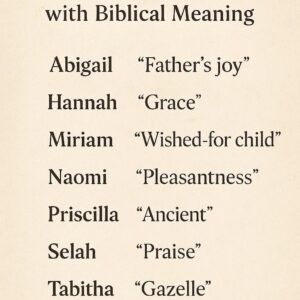
Hannah: Meaning “favor” or “grace.” Hannah’s heartfelt prayer for a child was answered with the birth of the prophet Samuel. Her name is synonymous with devout faith, heartfelt prayer, and graciousness.
H3: Names of Grace and Beauty
These names directly embody the concepts of loveliness, favor, and charm.
-
Abigail: Meaning “my father’s joy.” Abigail in the Bible was a woman of exceptional intelligence, beauty, and diplomacy who prevented bloodshed. The name radiates joy, wisdom, and beauty both inside and out.
-
Naomi: Meaning “pleasantness” or “my delight.” Though Naomi faced profound loss, her story culminates in redemption and love through her daughter-in-law Ruth. The name carries a mature, sweet, and comforting beauty.
-
Susanna: From the Hebrew Shoshana, meaning “lily” or “rose.” Appearing in the Book of Daniel, Susanna is a virtuous woman falsely accused but ultimately vindicated. The name is floral, elegant, and pure.
-
Phoebe: Meaning “bright” or “radiant.” Mentioned in the New Testament (Romans 16:1) as a deaconess and patron, Phoebe was a trusted leader in the early church. The name feels fresh, luminous, and strong.
H2: Unique and Less Common Biblical Names
If you’re looking for a name that is both deeply rooted and distinctive, these gems offer rare beauty.
H3: Names from Nature and Places
The Bible is rich with imagery from the natural world, giving us names that feel organic and grounded.
-
Tamar: Meaning “date palm.” The palm tree is a symbol of victory, resilience, and uprightness. Several women in the Bible bear this name, each showing remarkable determination.
-
Jemma: A variant of Jemima, meaning “dove.” The dove is a universal symbol of peace, purity, and the Holy Spirit. Jemima was one of Job’s beautiful daughters born after his trials.
-
Keziah: Also a daughter of Job, meaning “cassia,” a fragrant spice similar to cinnamon. It’s a name that appeals to the senses—warm, exotic, and sweetly spicy.
-
Shiloh: A place name meaning “tranquil” or “His gift.” While often used for boys, its soft sound and peaceful meaning make it a growing choice for girls, evoking a sense of calm and destiny.
-
Zion: Another place name meaning “highest point” or “fortress.” It signifies a sacred, joyful place. For a girl, it’s a powerful, modern-sounding name full of strength and aspiration.
H3: Names with Strong Meanings and Stories
These names belong to women who displayed remarkable courage, loyalty, or intellect.
-
Miriam: The probable meaning is “beloved” or “wished-for child.” As the sister of Moses, she was a prophetess and a leader. The name is musical, strong, and classic with a touch of antiquity.
-
Deborah: Meaning “bee.” Deborah was a prophetess and the only female judge of Israel, leading her people to military victory. The name suggests industriousness, sweetness (like honey), and potent leadership.
-
Esther: Possibly derived from the Persian word for “star” or the Hebrew for “hidden.” Queen Esther displayed incredible bravery to save her people, showing that beauty and cunning courage can change history.
-
Priscilla: A diminutive of the Roman Prisca, meaning “ancient” or “venerable.” In the New Testament, Priscilla was a knowledgeable teacher and missionary who worked alongside her husband Aquila. It’s a name that feels both antique and crisp, suggesting wisdom and partnership.
-
Tabitha: (Aramaic) / Dorcas (Greek): Both mean “gazelle,” an animal noted for its grace and beauty. Tabitha was a disciple known for her acts of charity and good works. The name is gentle, kind, and has a lovely, skipping rhythm.
H2: Names with Beautiful Spiritual Meanings
These names directly reflect virtues, divine attributes, or expressions of faith.
-
Grace: While not a direct biblical character’s name, the concept of charis (grace) is central to the New Testament. It is the unmerited favor and love of God. As a name, it is simple, direct, and profoundly beautiful.
-
Faith: Similarly, pistis (faith) is a cornerstone virtue. It’s a name that declares a core spiritual principle with clarity and strength.
-
Hope: The theological virtue of elpis (hope). It is an anchor and a positive expectation. The name is timeless, optimistic, and gentle.
-
Joy: A fruit of the Spirit, representing deep, spiritual gladness. It’s a short, vibrant name full of positive energy.
-
Selah: A musical term from the Psalms, likely indicating a pause for reflection. It’s a modern-sounding name with a deeply contemplative and melodic quality.
H2: Comparative Table: Popular Biblical Names & Their Meanings
This table provides a quick-reference overview of some of the most beloved options.
| Name | Original Language | Meaning | Key Biblical Figure/Reference | Vibe & Feel |
|---|---|---|---|---|
| Abigail | Hebrew | “My father’s joy” | Intelligent, peaceful wife of David | Joyful, wise, strong, classic |
| Hannah | Hebrew | “Favor” or “grace” | Devout mother of the prophet Samuel | Gentle, gracious, prayerful, sweet |
| Leah | Hebrew | “Weary” or “delicate” (meadow) | First wife of Jacob, mother of tribes | Gentle, resilient, soft, vintage |
| Naomi | Hebrew | “Pleasantness” | Mother-in-law of Ruth | Kind, comforting, warm, mature beauty |
| Esther | Persian/Hebrew | “Star” or “hidden” | Brave Queen who saved the Jewish people | Regal, courageous, beautiful, strategic |
| Miriam | Hebrew | “Beloved” or “wished-for child” | Prophetess, sister of Moses | Musical, prophetic, strong, ancient |
| Phoebe | Greek | “Bright,” “radiant” | Deaconess and patron in the early church | Luminous, fresh, helpful, bright |
| Sarah | Hebrew | “Princess” | Matriarch, wife of Abraham | Noble, regal, timeless, foundational |
Navigating Pronunciation and Modern Variations
The journey of a name from ancient text to modern birth certificate often leads to lovely variations.
-
Elisabeth vs. Elizabeth: The Hebrew Elisheva (“My God is an oath”) became Elisabeth in Greek. The “z” spelling (Elizabeth) became standard in English, thanks to royalty. Both are perfectly valid and beautiful.
-
Evangeline: While not a direct biblical name, it derives from the Greek euangelion, meaning “good news” or “gospel.” It’s a gorgeous, literary extension of a core biblical concept.
-
Lilian/Lily: Connected to Susanna (Hebrew for lily), and the lily is a symbol of purity in the Song of Songs. Lily has become a hugely popular floral name with this quiet biblical connection.
-
Mara: Naomi asked to be called Mara, meaning “bitter,” after her losses. While poignant, some modern parents are drawn to its stark, simple beauty and literary feel.
-
Noa: The feminine form of Noah (“rest” or “comfort”). A popular, sleek, and modern Israeli name that is gaining recognition globally.
Important Note for Readers: When you settle on a name, research its various spellings and pronunciations. Say it out loud with your last name. Consider potential nicknames. The best choice will feel right in your heart and sound right to your ear.
How to Choose the Perfect Biblical Name for Your Daughter
With so many stunning options, how do you decide? Here are a few thoughtful questions to guide you:
-
Sound & Compatibility: Does it flow well with your last name and any middle names? Is the pronunciation intuitive for your cultural context?
-
Meaning & Story: Does the biblical story or meaning behind the name resonate with you? Is it a narrative or virtue you’d be proud to share with your daughter?
-
Style: Are you looking for a classic (Sarah, Rebecca), a vintage revival (Ada, Clara), a strong and rare (Deborah, Keziah), or a soft and melodic (Leah, Selah) name?
-
Initials & Nicknames: Check the initials to avoid unintended words. Do you like the common nicknames (Abby for Abigail, Ellie for Elizabeth, Anna for Hannah)?
Ultimately, trust your instinct. The name that keeps coming back to you, the one that feels like a gentle revelation, is likely the one meant for your child.
Conclusion
The search for the perfect girl’s name leads many to the timeless pages of the Bible, where beauty is interwoven with faith, strength, and grace. From the classic dignity of Sarah to the radiant warmth of Phoebe, and the unique resilience of Tamar, these names offer more than just pretty sounds—they offer stories. They are gifts of meaning that your daughter can carry and grow into throughout her life. May your journey through these names be as joyful and significant as the moment you finally choose the one that is meant for her.
FAQ: Pretty Girl Names with Biblical Meaning
Q: Are all biblical names old-fashioned?
A: Not at all! While many are classic, names like Phoebe, Selah, Shiloh, Zion, and Noa have a very contemporary feel. The Bible offers a wide spectrum from timeless to trendy.
Q: Can I use a biblical name if I’m not very religious?
A: Absolutely. Many people choose these names for their historical significance, literary beauty, melodic quality, or the positive virtues they represent, separate from religious doctrine.
Q: What are some pretty biblical names that aren’t super common?
A: Consider Keziah, Jemima, Tabitha, Priscilla, Damaris (an educated Athenian woman from Acts), Iris (Greek for rainbow, a symbol of God’s promise), or Lydia (a successful merchant and early convert in Acts).
Q: Where can I find the full stories behind these names?
A: You can read the stories in any standard Bible translation. Online resources like BibleGateway.com or the Blue Letter Bible are excellent free tools where you can search for the names and read them in context. For scholarly depth on name origins, websites like Behind the Name are invaluable.
Additional Resource
For an even deeper dive into the etymology and history of these names, we recommend visiting Behind the Name. This authoritative site provides detailed linguistic breakdowns and cultural usage for names from the Bible and beyond, helping you understand the full journey of your chosen name.