On a windswept mountainside or nestled in a quiet forest clearing, it stands—a gnarled, resilient evergreen, its blue-black berries dusted with a pale bloom. This is the juniper, a plant that has silently witnessed the march of human history, not merely as a botanical specimen, but as a profound spiritual companion. Beyond its culinary use in gin or its sharp, clean scent, lies a deep and ancient wisdom. For millennia, across continents and cultures, juniper has been revered as a potent symbol of purification, protection, healing, and eternal life. Its spirit is one of rugged perseverance, a cleansing breath in the face of stagnation, and a protective barrier against unseen forces. This article embarks on an extensive exploration into the multifaceted spiritual meaning of juniper, unraveling its threads from ancient myths to modern mindfulness, inviting you to discover why this humble evergreen has been considered a sacred bridge between the earthly and the divine for thousands of years.
Chapter 1: Botanical Sentinel – The Juniper in the Natural World
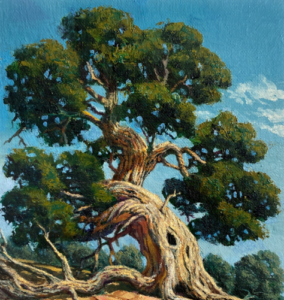
To understand its spirit, one must first know its body. The juniper (genus Juniperus) is not a single entity but a vast family of coniferous trees and shrubs spanning over 50 species. Its defining characteristic is its incredible adaptability. From the creeping Juniperus horizontalis that carpets dry ground to the majestic Juniperus drupacea towering in forests, juniper thrives where others struggle—on rocky cliffs, in sandy soils, and under relentless sun. This resilience is the first key to its spiritual symbolism.
Its “berries,” technically female seed cones with fused, fleshy scales, take years to mature, often requiring a frost or two to reach their peak potency. This slow ripening process mirrors spiritual growth: true wisdom and power are not swift but develop with time and weathering. The evergreen nature of its needles speaks to permanence, continuity, and life that persists through the symbolic death of winter. The wood is dense, aromatic, and resistant to decay, making it a material for objects meant to last and protect. In its very biology, juniper whispers lessons of endurance, patience, and self-sufficiency, establishing itself as a botanical sentinel of strength.
Chapter 2: Roots in Antiquity – Juniper in Ancient Myths and Global Traditions
The spiritual footprint of juniper is etched deeply into the bedrock of human civilization.
-
The Mediterranean and Biblical Lands: In ancient Egypt, juniper oil was used in the embalming process, linking it to protection for the soul’s journey into the afterlife. The Bible references juniper (often translated from the Hebrew rothem, likely the Spanish Broom or a juniper species) as a place of shelter and divine encounter. The prophet Elijah, in a moment of despair, rests under a “juniper tree” and is visited by an angel (1 Kings 19:4-5), framing it as a tree of solace and heavenly sustenance.
-
Celtic and Norse Europe: The Celts associated juniper with the festival of Alban Arthan (Winter Solstice), using its smoke to purify homes and stables during the darkest time of the year, ensuring the sun’s return. In Norse mythology, juniper was sacred to the thunder god Thor, believed to be a protection against lightning and evil spirits. Its strong, straight shoots were used for rune staves.
-
Native American Traditions: Numerous tribes, particularly in the Southwest and Plains, hold juniper as a primary medicine. It is used in smudging ceremonies for purification before rituals, as a tea for physical and spiritual cleansing, and its berries are seen as a gift of nourishment from the Earth Mother. The smoke is believed to carry prayers to the Creator.
-
Asian Spiritual Practices: In Tibetan Buddhism, juniper (shugpa) is considered one of the most sacred plants. It is burned extensively as incense (sang) in daily offerings to local deities (yul lha), to purify environments, and to create a conducive atmosphere for meditation. The Himalayas are often shrouded in the sacred scent of burning juniper, a direct spiritual communication with the landscape.
Juniper in Global Spiritual Traditions
| Culture/Region | Primary Spiritual Association | Common Ritual Use |
|---|---|---|
| Celtic Europe | Purification, Protection, Solar Return | Smudging at Solstice, Warding homes |
| Norse Mythology | Protection, Strength, Sacred to Thor | Rune-making, Charms against evil |
| Native American | Cleansing, Healing, Prayer | Smudging, Medicinal teas, Ceremonial incense |
| Tibetan Buddhist | Purification, Offering, Communion with Deities | Sang incense offerings, Meditation aid |
| Biblical References | Shelter, Divine Encounter, Sustenance | Symbol of God’s provision and refuge |
Chapter 3: Purification and Protection – The Cleansing Flame of Juniper
The most universal and potent spiritual attribute of juniper is its power to purify and protect. This is not merely about physical cleanliness but about clearing psychic debris, negative energies, stagnant emotions, and unwelcome spiritual influences.
The practice of burning juniper—as leaves, berries, or wood—is a global phenomenon. The smoke is believed to act as a spiritual disinfectant. In the Scottish Highlands, it was burned in homes when someone was sick or had died. In the American Southwest, medicine people wave juniper smoke over participants in a ceremony. The mechanism is consistent: the fragrant smoke is seen as a vehicle that lifts away impurity and establishes a sacred, protected space.
This protective quality extends to the living plant. Planting juniper near a home’s entrance was thought to guard against thieves, ill-wishers, and lightning. Carrying a piece of its wood or a few berries served as a personal amulet. Spiritually, juniper teaches us the importance of creating and maintaining healthy boundaries, not out of fear, but from a place of self-respect and the need for a clear, sacred space in which to grow.
Chapter 4: Healing and Resilience – The Medicine of Spirit and Body
Juniper’s spiritual healing is intrinsically linked to its physical medicinal properties, creating a holistic paradigm. Its diuretic and antiseptic qualities were seen as the physical manifestation of its ability to flush out spiritual toxins—guilt, shame, old grief, and attachment to past hurts.
The spirit of juniper is one of resilience and recovery. Just as the plant helps clear infections from the body, it is invoked to clear the “infections” of the spirit: bitterness, resentment, and emotional congestion. Its use in steam baths and saunas across Northern Europe and Asia combined physical detoxification with spiritual renewal, sweating out impurities on all levels.
In this context, juniper is a spiritual ally for those recovering from trauma, illness, or a period of deep difficulty. It does not promise a painless journey but offers the strength of the cliffside tree—the tenacity to hold on, the flexibility to bend in the storm, and the innate vitality to regenerate. Its medicine reminds us that healing is an active process of cleansing and strengthening the core self.
Chapter 5: A Bridge to the Divine – Juniper in Ritual, Prayer, and Meditation
Juniper consistently appears as a mediator, a bridge between the human and the divine. Its smoke is not just cleansing; it is a carrier. In Tibetan practice, the sang smoke carries offerings of barley flour and prayers on its rising column to the deities of the sky. For many shamanic traditions, the scent of juniper helps alter consciousness slightly, making the veil between worlds more permeable for visionary work.
Its role in facilitating prayer and meditation is profound. The clean, sharp, and slightly sweet aroma helps clear the mental clutter, allowing for deeper focus and contemplation. It grounds spiritual aspiration in the physical senses, making the intangible more accessible. Using juniper before meditation can be seen as “sweeping the temple of the mind,” preparing a clean slate for connection with higher consciousness, one’s inner self, or the divine.
Chapter 6: The Symbolic Tapestry – Berries, Wood, and Evergreen Essence
Every part of the juniper weaves a symbolic thread:
-
The Berries: Represent hidden wisdom, the fruition of long patience, and concentrated spiritual potency. Their journey from flower to ripe berry mirrors the soul’s maturation.
-
The Wood: Symbolizes durability, protection, and the hidden strength within. Objects made from juniper wood (crosses, talismans, prayer beads) are believed to retain its protective energy.
-
The Evergreen Foliage: The ultimate symbol of eternal life, fidelity, and the enduring soul. It affirms that life-force persists through all cycles of darkness and light.
-
The Scent: Acts as an immediate trigger for memory, reverence, and the shift into a sacred mindset, anchoring the spiritual experience in the physical world.
Chapter 7: Juniper in the Modern Spiritual Tapestry
Today, the spiritual use of juniper is experiencing a renaissance. It is found in the smudge bundles of neo-shamanic practitioners, the incense of contemporary pagans and witches, and the essential oil blends of those seeking natural wellness. It appeals to the modern seeker because its symbolism is earned, not bestowed; it speaks of survival, practical cleansing, and a connection to raw, untamed nature. In a world of digital overload and abstract anxieties, juniper offers a tangible, sensory, and grounded spiritual practice.
Chapter 8: Practical Applications – Integrating Juniper into Your Spiritual Practice
If you feel called to work with juniper’s spirit, do so with respect and intention.
-
Smudging: Light a bundle of dried juniper twigs, let it catch, then gently blow out the flame to let it smolder. Waft the smoke around your body (keeping it moving) or through your space with a feather or your hand, focusing on the intention of clearing negativity.
-
Meditation Aid: Place a drop of juniper essential oil (diluted) on your wrists or in a diffuser before sitting in meditation. Focus on its scent as an anchor.
-
Protective Sachets: Place dried berries and needles in a small cloth bag. Keep it in your car, by your door, or under your pillow as a protective charm.
-
Simple Prayer Offerings: In the Tibetan tradition, you can offer a few dry juniper needles on a lit charcoal disk (in a well-ventilated area) with a simple prayer of gratitude or purification.
Important Note: Always source juniper ethically and sustainably. Be aware that some species are endangered. Consult a healthcare professional before internal use, especially if pregnant, nursing, or on medication.
Conclusion: The Eternal Ember
Juniper stands as an eternal spiritual ember in the hearth of humanity—a resilient guardian, a cleansing breath, and a bridge to the sacred. Its teachings are written in resilience, its rituals in rising smoke, and its gift is the enduring promise of purification, protection, and the evergreen persistence of the spirit. To connect with juniper is to connect with an ancient, rugged, and profoundly healing strand of the earth’s own wisdom.
Frequently Asked Questions (FAQs)
Q1: Is juniper safe to burn (smudge) indoors?
A: Yes, but with caution. Ensure excellent ventilation, as the smoke can be irritating to some. Use a heatproof dish and keep it away from flammable materials. Be mindful of smoke alarms.
Q2: What’s the difference between juniper and sage for smudging?
A: Both purify, but their energies differ. Sage (particularly white sage) is often used for heavy, deep clearing—a “spiritual reset.” Juniper is also cleansing but is more associated with ongoing protection, healing, and creating a fortified, sacred space. Many use sage first for major clearing, then juniper to protect and maintain the cleansed space.
Q3: Can I use the juniper berries from my backyard?
A: You must first correctly identify the species. Some ornamental junipers produce berries that are inedible or mildly toxic. Only use berries from known culinary or medicinal species (Juniperus communis is most common). When in doubt, purchase from a reputable herbal supplier.
Q4: How does juniper connect to dreams?
A: In folklore, juniper placed under the pillow or near the bed is believed to ward off nightmares and induce prophetic or peaceful dreams. Its protective quality extends to the vulnerable dream state.
Q5: Is there a connection between juniper and grief?
A: Yes. Its historical use in times of death and its symbolism of eternal life position it as a plant for transitions. Its cleansing energy can help process and release the heavy energies of grief, while its evergreen nature offers comfort in continuity.