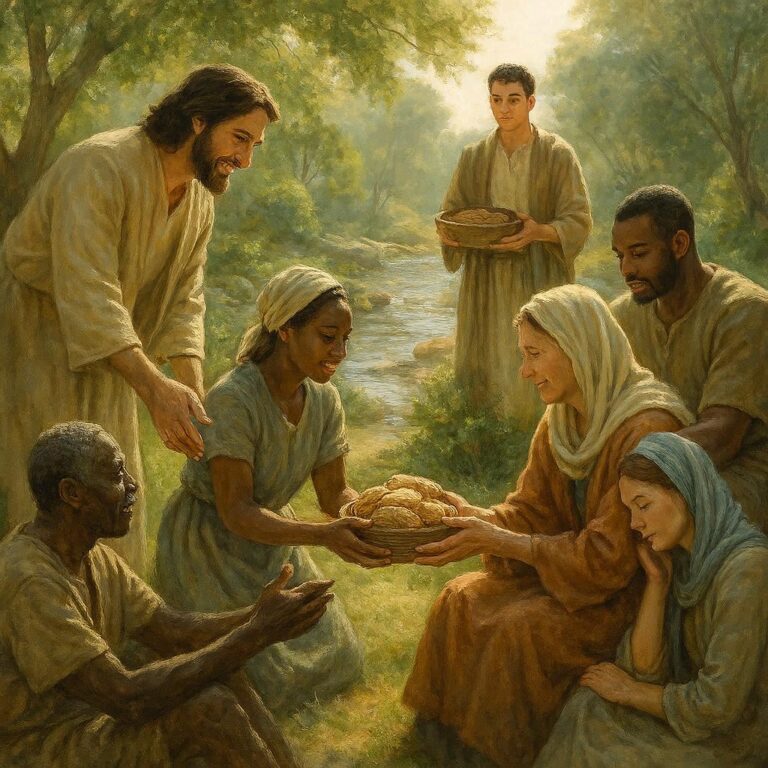
From the first flutter of “a partridge in a pear tree” to the final triumphant drumming of “twelve drummers drumming,” The Twelve Days of Christmas is a ubiquitous soundtrack to the holiday season. For many, it is a whimsical, cumulative children’s rhyme, a memory game of ever-expanding and absurd extravagance. Yet, for decades, a compelling and persistent theory has woven its way through Christian circles, suggesting this seemingly frivolous carol is, in fact, something far more profound: a clandestine catechism, a secret code for teaching the tenets of the Christian faith during times of persecution in 16th-century England. This article embarks on an exhaustive exploration of this captivating claim, meticulously dissecting each symbol, scrutinizing its historical plausibility, and unpacking the rich biblical and liturgical truths it is said to encode. We will journey beyond the surface merriment to ask: Is this beloved carol merely a festive counting song, or could it be one of history’s most ingenious and enduring vehicles of theological instruction?
2. The Historical Context: From Medieval England to the Modern World
The earliest known version of the song appears in the 1780 children’s book Mirth Without Mischief, with lyrics closely resembling the modern standard. Its origins are likely French, and it was almost certainly a memory-and-forfeit game long before it became a carol. The musical setting most familiar today was arranged by English composer Frederic Austin in 1909, who also established the now-iconic “five gold rings” phrasing.
The crucial period for the “hidden meaning” theory is the English Reformation (c. 16th-17th centuries). Following King Henry VIII’s break with Rome and the subsequent Protestant establishment, the practice of Roman Catholicism became increasingly dangerous. The Catholic Mass was outlawed, priests were executed, and laypeople faced severe penalties for practicing their faith. It was in this climate of oppression, proponents argue, that creative methods of clandestine instruction emerged. Symbolism, hidden in plain sight within seemingly innocuous folk songs, became a powerful tool for preserving doctrine. While no contemporaneous document directly links the published song to this purpose, the theory posits that its structure provided a perfect mnemonic framework for essential beliefs that Catholics were forbidden from openly teaching.
3. The “Hidden Meaning” Hypothesis: A Catechism in Code?
The core of the theory is that each of the twelve gifts presented by the singer’s “true love” (understood to be God Himself) represents a fundamental element of Christian faith, specifically from a Catholic perspective. The “true love” giving the gifts is not a romantic suitor, but God the Father. The “me” who receives the gifts is every baptized Christian. The “twelve days,” therefore, are not the countdown to Christmas but the liturgical period from Christmas Day to the Feast of the Epiphany (January 6th), a time of celebration and reflection on the mystery of the Incarnation.
This interpretation transforms the song from a list of extravagant presents into a systematic, albeit symbolic, curriculum:
-
The Theology of the Trinity and Christology (the nature of God and Christ).
-
The Core Narratives of the Gospels (the life and work of Jesus).
-
The Ethical Framework of the Christian Life (virtues, commandments).
-
The Doctrine of Grace and the Sacraments (channels of God’s gift).
-
The Role of the Church and its Spiritual Gifts.
We will now embark on a detailed, day-by-day exegesis of this proposed symbolic code.
4. Day-by-Day Exegesis: A Deep Dive into the Symbols and Their Proposed Scriptural Correlations
On the first day of Christmas, my true love gave to me: A Partridge in a Pear Tree.
-
Symbol: The partridge is a bird known for feigning injury to draw predators away from its defenseless nestlings—a powerful symbol of Christ’s sacrificial love. As Jeremiah 17:11 laments, “Like a partridge that hatches eggs it did not lay are those who gain riches by unjust means.” The true Partridge is Christ, who gathers humanity under his protection. The pear tree is seen as representative of the Cross, the tree upon which Christ, the Partridge, was crucified for the salvation of His children. Thus, the first gift is the foundational gift: Jesus Christ, the Redeemer.
-
Biblical/Doctrinal Correlation: The Incarnation and Atonement. John 1:14 (“The Word became flesh”), and Matthew 23:37 (where Jesus likens himself to a mother hen gathering her chicks).
On the second day… Two Turtle Doves.
-
Symbol: Turtle doves were the prescribed sacrificial offering for the poor in the Mosaic Law (Leviticus 12:8). They represent the dual nature of Christ (fully God and fully man) or, more commonly, the two testaments of the Bible—the Old and New Testaments—which together tell the complete story of salvation.
-
Biblical/Doctrinal Correlation: The harmony of Scripture. The offering of doves at the Presentation of Jesus in the Temple (Luke 2:24) directly connects this symbol to Christ’s fulfillment of the Law.
On the third day… Three French Hens.
-
Symbol: In the 16th century, “French hens” were expensive, fancy fowl, symbolic of luxury and value. These are said to represent the three theological virtues enumerated by Paul in 1 Corinthians 13:13: Faith, Hope, and Love (Charity). They are the priceless, foundational gifts of grace that govern the Christian life.
-
Biblical/Doctrinal Correlation: The core Christian virtues. 1 Thessalonians 1:3 also highlights this triad: “your work produced by faith, your labor prompted by love, and your endurance inspired by hope.”
On the fourth day… Four Calling Birds.
-
Symbol: This is a corruption of the original “colly birds” (blackbirds). They are interpreted as the four Evangelists: Matthew, Mark, Luke, and John. These are the “callers” who proclaim the Gospel—the Good News of Christ—to the four corners of the earth.
-
Biblical/Doctrinal Correlation: The Four Gospels. Their voices “call out” through their writings. Revelation 4:6-7 describes four living creatures, often symbolically linked to the Evangelists.
On the fifth day… Five Gold Rings.
-
Symbol: The five gold rings are not jewelry but likely a reference to ring-necked birds (e.g., pheasants). Symbolically, they stand for the first five books of the Old Testament, the Pentateuch or Torah (Genesis, Exodus, Leviticus, Numbers, Deuteronomy). These books, also called the “Books of Moses,” contain the foundational Law and the covenant history of God’s people. Their “gold” signifies their priceless value and enduring truth.
-
Biblical/Doctrinal Correlation: The Law (Torah). The foundation of Jewish faith and the backdrop for Christian understanding of covenant and redemption.
On the sixth day… Six Geese a-Laying.
-
Symbol: The egg is a universal symbol of creation and new life. Six geese laying eggs represent the six days of Creation as narrated in Genesis Chapter 1. Each day, God spoke life and order into existence, culminating in the creation of humanity.
-
Biblical/Doctrinal Correlation: The doctrine of Creation. Genesis 1:31: “God saw all that he had made, and it was very good.”
On the seventh day… Seven Swans a-Swimming.
-
Symbol: The graceful swan, moving effortlessly upon the water, is a symbol of the Holy Spirit, often depicted as a dove over the waters. The seven swans represent the sevenfold gifts of the Holy Spirit as described in Isaiah 11:2-3: wisdom, understanding, counsel, fortitude, knowledge, piety, and fear of the Lord. These are the gifts that empower the believer for a life of grace.
-
Biblical/Doctrinal Correlation: The gifts of the Holy Spirit. Also referenced in the Catholic sacrament of Confirmation.
On the eighth day… Eight Maids a-Milking.
-
Symbol: The maids, among the lowest and most common of servants, performing a nourishing task, represent the Beatitudes (Matthew 5:3-10). These eight declarations of blessing (“Blessed are the poor in spirit…”) are Christ’s radical formula for happiness and the heart of Christian ethical teaching. They are spiritual nourishment for the humble.
-
Biblical/Doctrinal Correlation: The Sermon on the Mount and Christian ethics.
On the ninth day… Nine Ladies Dancing.
-
Symbol: Joyful, celebratory dance. These represent the nine fruits of the Holy Spirit listed by Paul in Galatians 5:22-23: love, joy, peace, patience, kindness, goodness, faithfulness, gentleness, and self-control. These are the visible characteristics, the “fruit,” that a life led by the Spirit produces.
-
Biblical/Doctrinal Correlation: The evidence of a Spirit-filled life.
On the tenth day… Ten Lords a-Leaping.
-
Symbol: Lords, figures of authority and law, leaping with vigor. These are the Ten Commandments (Exodus 20:1-17), the moral law given to Moses. They are not a restriction but a gift, leaping with life-giving authority, showing the path to a righteous life.
-
Biblical/Doctrinal Correlation: The Decalogue, the foundation of moral law.
On the eleventh day… Eleven Pipers Piping.
-
Symbol: The pipers, with their loud and proclaiming instruments, represent the eleven faithful Apostles (excluding Judas Iscariot). After the Resurrection and Ascension, these men were charged with “piping” the Gospel message to the entire world.
-
Biblical/Doctrinal Correlation: The Great Commission (Matthew 28:16-20). The founding witnesses of the Church.
On the twelfth day… Twelve Drummers Drumming.
-
Symbol: The steady, foundational beat of the drum. These signify the twelve points of doctrine articulated in the Apostles’ Creed, a core statement of Christian belief recited for centuries. Each drumbeat is a foundational truth: belief in God the Father, the Son, the Holy Spirit, the Church, forgiveness, resurrection, and everlasting life.
-
Biblical/Doctrinal Correlation: The Rule of Faith. The Creed summarizes the apostolic teaching.
The Proposed Symbolic Code of “The Twelve Days of Christmas”
| Day | Gift | Proposed Symbolic Meaning (Catechism Theory) | Biblical/Doctrinal Correlation |
|---|---|---|---|
| 1st | Partridge in a Pear Tree | Jesus Christ, sacrificed on the Tree of the Cross | The Incarnation & Atonement (John 1:14) |
| 2nd | Two Turtle Doves | The Old & New Testaments; Dual nature of Christ | The Presentation (Luke 2:24); Scripture |
| 3rd | Three French Hens | The Theological Virtues: Faith, Hope, and Love | 1 Corinthians 13:13 |
| 4th | Four Calling Birds | The Four Evangelists: Matthew, Mark, Luke, John | The Four Gospels |
| 5th | Five Gold Rings | The Pentateuch: First Five Books of the Old Testament | The Torah/Law (Genesis-Deuteronomy) |
| 6th | Six Geese a-Laying | The Six Days of Creation | Genesis Chapter 1 |
| 7th | Seven Swans a-Swimming | The Seven Gifts of the Holy Spirit | Isaiah 11:2-3 |
| 8th | Eight Maids a-Milking | The Eight Beatitudes | Matthew 5:3-10 |
| 9th | Nine Ladies Dancing | The Nine Fruits of the Holy Spirit | Galatians 5:22-23 |
| 10th | Ten Lords a-Leaping | The Ten Commandments | Exodus 20:1-17 |
| 11th | Eleven Pipers Piping | The Eleven Faithful Apostles | The Great Commission (Matt. 28:16-20) |
| 12th | Twelve Drummers Drumming | The Twelve Points of the Apostles’ Creed | The Rule of Faith |
5. Theological and Historical Critique: Support and Skepticism
While the hidden meaning theory is elegant and spiritually edifying, historians and musicologists largely regard it as a pious legend with no direct evidence from the song’s period of origin. Key critiques include:
-
Lack of Primary Evidence: No known 16th- or 17th-century source links the song to Catholic catechism. The theory appears to have been popularized in the 20th century.
-
Protestant England’s Context: Many Christmas traditions, including carols, were suppressed by Puritan Protestants, not just Catholic ones. A song this cryptic would have been risky for anyone.
-
Symbolic Stretching: Some correlations (French Hens = Virtues) feel more arbitrary than others (12 Drummers = 12 Creedal articles).
However, the theory’s value is not solely dependent on its historical veracity. Its true power lies in its hermeneutical (interpretive) utility. Regardless of its origin, it provides a profound Christian framework for engaging with a secular-seeming carol. It allows believers to “redeem” the song, transforming it into a tool for meditation and memory during the Christmas season. It serves as a brilliant example of how faith can find expression and nourishment in cultural artifacts.
6. The Liturgical Link: The True Twelve Days (Christmas to Epiphany)
Beyond the coded theory, the “Twelve Days” have a genuine and profound liturgical reality. In historic Christian calendars (Eastern and Western), Christmas is not a single day but a season. It begins on December 25th (the Feast of the Nativity) and culminates on January 6th with the Feast of the Epiphany (celebrating the visitation of the Magi, Christ’s manifestation to the Gentiles). This period is a sacred, joyous octave-plus of celebration, distinct from the preparatory season of Advent. Understanding this context reframes the song. It becomes a count through the Christmas season, a daily anticipation leading to the revelation (Epiphany) of Christ to the world. Each cumulative verse mirrors the growing joy and revelation of the Incarnation.
7. Cultural Impact and Enduring Legacy
Whether as a secret catechism, a memory game, or a festive carol, The Twelve Days of Christmas has embedded itself deeply into Western culture. Its repetitive, cumulative structure makes it perfect for group singing and playful competition. It has been parodied, rearranged in countless musical styles, and referenced in films, literature, and advertisements. The “hidden meaning” theory itself has become a cherished part of the carol’s modern legacy, shared in church bulletins, Sunday school classes, and blog posts as a way to deepen the spiritual significance of the holiday. It stands as a testament to the human desire to find deeper meaning in our stories and songs.
8. Conclusion: A Tapestry of Meaning
The Twelve Days of Christmas is a rich tapestry woven with threads of folklore, musicology, faith, and imagination. While its origins as a clandestine Catholic catechism are historically unproven, the symbolic interpretation offers a theologically rich and spiritually satisfying lens through which to view this classic carol. Ultimately, its greatest gift may be its ability to point us, day by day and verse by verse, beyond the frivolity of partridges and pipers to the profound mysteries of creation, covenant, and the Incarnate Christ whose birth the season celebrates. It invites us to find the sacred in the seemingly silly, and to remember that truth and beauty can be encoded in the most joyful of melodies.
9. Frequently Asked Questions (FAQs)
Q1: Is there any solid historical proof that the song was used as a secret catechism?
A: No, there is no direct documentary evidence from the 16th or 17th centuries linking the published song to this purpose. The theory is considered a modern folk etymology, though it is a meaningful and popular interpretation.
Q2: Who is the “true love” in the biblical interpretation?
A: In the coded meaning, the “true love” is understood to be God the Father, who gives the gifts (of faith, scripture, grace, etc.) to the believer (“me”).
Q3: What are the “Twelve Days” in a liturgical sense?
A: They are the festive Christian season beginning on Christmas Day (December 25) and ending on the Feast of the Epiphany (January 6).
Q4: Doesn’t the song’s extravagance contradict Christian simplicity?
A: The extravagance is symbolic. The theory holds that the over-the-top gifts reflect the inestimable, overflowing value of the spiritual gifts God bestows, which are far more precious than material wealth.
Q5: Are there other Christian interpretations of the song’s symbols?
A: Yes, some variations exist. For example, the “Five Gold Rings” are sometimes linked to the first five books of the Bible or the five wounds of Christ. The core framework, however, remains consistent.
10. Additional Resources
-
Books:
-
The Twelve Days of Christmas: The Story Behind a Favorite Christmas Song by Helen Haidle (explores the theory).
-
Stations of the Sun: A History of the Ritual Year in Britain by Ronald Hutton (for historical context of Christmas traditions).
-
-
Academic Articles:
-
Search for “The Twelve Days of Christmas folk song origins” in musicology or folklore journals like Folklore or The Journal of American Folklore.
-
-
Websites:
-
The Hymns and Carols of Christmas website (www.hymnsandcarolsofchristmas.com) for extensive historical texts.
-
The Catholic Education Resource Center (www.catholiceducation.org) for articles on the catechism theory.
-