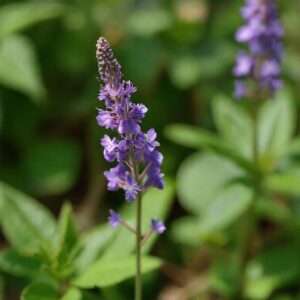
In the quiet, shaded corners of forests and the sheltered nooks of gardens, a small yet formidable presence emerges. The violet, with its heart-shaped leaves and blossoms of deep, soulful purple, is far more than a mere herald of spring. To the casual observer, it is a delicate wildflower; to the spiritual seeker, it is a key—a living, breathing repository of ancient wisdom, sacred symbolism, and profound metaphysical power. This article embarks on an exhaustive journey into the violet spiritual meaning, unearthing its significance across cultures, eras, and spiritual traditions. We will explore its connection to divinity and royalty, its role as a bridge to the subconscious, its potent healing properties, and its gentle guidance for the modern soul. Prepare to see this humble flower not as you have before, but as a timeless emblem of spiritual evolution, a whisper from the divine in a world often too loud to hear.
1. Introduction: Beyond the Petals
To truly understand the violet is to engage in an act of humble observation. It does not shout its presence like the sunflower, nor does it intoxicate with overwhelming perfume like the jasmine. Instead, it invites you to stoop down, to come closer, to leave the bustling world behind and enter its realm of quiet majesty. This very act—the bending of the knee, the lowering of the gaze—is the first spiritual lesson the violet imparts: that the greatest truths are often found not in the grandiose, but in the modest and overlooked.
Spiritually, the violet is a paradox. It is a flower of both imperial power and heartfelt humility. Its color, a deep and mystical purple, has long been associated with royalty, priesthood, and the highest echelons of spiritual awareness. Yet, the flower itself grows low to the ground, often hiding its face beneath its leaves, embodying modesty and unassuming grace. This duality is the heart of its power. It teaches that true spiritual authority is not domineering but gentle, that authentic wisdom does not boast but quietly knows, and that the most profound connection to the divine begins with a humble heart. As we delve into its history, symbolism, and practical applications, we will unravel how this singular flower can serve as a guide for personal transformation, a tool for healing, and a constant reminder of the sacred beauty that permeates our world.
2. A Tapestry of Time: The Violet in History and Mythology
The spiritual legacy of the violet is not a modern construct but a thread woven through the fabric of human history. From the sun-drenched hills of ancient Greece to the solemn cathedrals of medieval Europe, the violet has been a constant, silent witness to humanity’s search for meaning.
The Sacred Flower of Ancient Greece: Myths of Artemis and Apollo
In Greek mythology, the violet’s origins are steeped in tales of love, loss, and transformation. One of the most poignant myths involves a nymph named Io, who caught the eye of Zeus. To protect her from the jealousy of his wife, Hera, Zeus transformed Io into a white heifer. As Io wept over her fate, her tears, falling upon the earth, sprang up as beautiful, fragrant violets—a symbol of her innocence and sorrow.
Another myth directly links the violet’s creation to the god of music and poetry, Apollo. As he pursued one of Artemis’s beautiful nymphs, she, in her desperation to escape his advances, called upon the gods for help. They transformed her into a violet, allowing her to hide modestly in the shade of the forest, preserving her purity. This story cemented the violet’s connection with modesty and faithful love. Furthermore, the violet was sacred to Artemis, the virgin goddess of the hunt and the moon. The flower was used to adorn her altars and the statues of her brother, Apollo, symbolizing the gentle, restorative aspect of nature that existed alongside its wild, untamable power. The Athenians even considered the violet their city’s emblem, using it to moderate anger, induce sleep, and comfort the heart.
Imperial Purple: The Violet in Rome and the Symbolism of Power
The Romans inherited the Greek appreciation for the violet but amplified its association with power and status. They cultivated violets extensively, using their petals to make wine (“Vinum Violatum”), to flavor food, and, most significantly, to create perfumes. The scent of violets was a mark of luxury and refinement.
Most importantly, the deep purple hue of the violet became inextricably linked with imperial authority. While the famous Tyrian purple dye came from sea snails, violet flowers provided a more accessible, albeit less colorfast, way to achieve a similar prestigious color. Napoleon Bonaparte famously adopted the violet as his emblem, signaling his return from exile during the “Hundred Days.” His followers used the phrase “Le violet reviendra au printemps” (“The violet will return in spring”) as a code for his imminent return, transforming the flower into a potent political symbol of resilience and loyalty. This historical journey from a nymph’s tears to an emperor’s badge demonstrates the violet’s fluid symbolism, encompassing both vulnerable emotion and formidable power.
The Modest Blossom of Christianity: Humility and the Passion of Christ
With the rise of Christianity, the violet’s symbolism underwent another transformation, emphasizing its attributes of humility and penitence. Its downward-facing bloom was seen as a visual representation of humbleness before God. In medieval art, the violet was often depicted in paintings of the Virgin Mary, representing her humility and purity.
The flower also became associated with the Passion of Christ. Its five petals were sometimes seen as a reminder of the five wounds of Christ, and its deep color, a symbol of mourning and repentance. During Lent, churches would often remove all lavish decorations, leaving only the simple, humble violet as a suitable adornment, a practice that led to liturgical vestments being purple during penitential seasons. This solidified the violet’s role as a bridge between human sorrow and divine forgiveness.
The Poet’s Muse: Violets in the Romantic and Victorian Eras
The language of flowers, or “floriography,” reached its peak during the Victorian era, and the violet was a star in this silent, sentimental lexicon. To give a violet was to send a message of faithfulness, loyalty, and “I return your love.” Its association with early death and young love, perhaps echoing the Greek myths, made it a common motif in poetry and literature. Shakespeare frequently used the violet as a symbol of fleeting beauty and virtue. In Hamlet, Laertes speaks of the “violets” of his sister Ophelia’s faithfulness, which withered after her father’s death.
The Romantic poets, like Wordsworth, saw in the violet a symbol of the quiet, enduring beauty of nature, a beauty that could be easily missed but offered profound consolation. This era cemented the violet’s emotional resonance in the Western psyche, linking it forever with nostalgia, tender love, and the bittersweet nature of memory.
3. The Color of Spirit: Decoding the Purple Hue
To comprehend the violet’s spiritual potency, one must first understand the power of its color. Purple sits at the far end of the visible light spectrum, a bridge between the warm, stimulating energy of red and the cool, calming intelligence of blue. This unique position grants it a profound spiritual significance across the globe.
The Science of Light and Perception
Scientifically, purple light has the shortest wavelength and highest frequency perceivable by the human eye. It is a color of high energy and vibration. In a spiritual context, this translates to a connection with higher states of consciousness. Just as ultraviolet light is beyond our normal vision, the color purple is associated with realities and understandings that lie just beyond our everyday perception—the realm of intuition, dreams, and psychic awareness.
Purple in Global Spirituality: Crown Chakra and Cosmic Consciousness
In Hinduism and many New Age spiritual systems, purple is the color of the Crown Chakra, or Sahasrara. Located at the top of the head, this chakra is our connection to the divine, universal consciousness, and higher self. When balanced, it allows for spiritual understanding, enlightenment, and a sense of oneness with all that is. The violet flower, by its very color, acts as a physical anchor for activating and healing this chakra.
In Catholicism, purple is the color of Advent and Lent, seasons of preparation, penitence, and royalty, acknowledging Christ as the “King of Kings.” In theosophy and the “I AM” Activity, the Violet Flame is a central spiritual concept—a divine, transmutative energy that practitioners invoke to purify their karma, heal emotional wounds, and accelerate their spiritual growth. This is not merely metaphorical; it is a vivid example of how the color purple is used as a focus for profound inner alchemy.
4. Core Tenets of Violet Spiritual Meaning
Having traced its historical and chromatic journey, we can now distill the violet’s spiritual meaning into several core, interconnected tenets.
Humility and Modesty: The Strength in Gentle Presence
This is the violet’s most immediate and poignant lesson. The flower does not strive to be the tallest or the loudest. It thrives in shade, its bloom often nodding gently towards the earth. Spiritually, this is a powerful antidote to the ego. In a world that often rewards self-promotion and arrogance, the violet reminds us that true strength lies in quiet confidence and unassuming grace. It teaches that we do not need to dominate a space to have value. Spiritual growth often requires the humility to acknowledge what we do not know, to listen more than we speak, and to find contentment in simply being, rather than constantly striving for recognition.
Faith and Spiritual Wisdom: A Bridge to the Divine
The violet’s historical use in religious ceremonies and its association with the Crown Chakra mark it as a flower of deep faith and spiritual wisdom. It is not a wisdom born of intellectual pursuit alone, but one that arises from direct, intuitive connection with the divine. Having a violet in your environment or meditating upon its image can serve as a focal point for prayer, contemplation, and opening the channels to higher guidance. It encourages a trust in the unseen, a faith that there is a larger, benevolent intelligence at work, even when the path ahead seems dark.
Intuition and the Subconscious Mind: Dreamwork and Psychic Awakening
As a flower that prefers the shadowy undergrowth, the violet is naturally linked to the parts of ourselves that reside just below the surface of conscious awareness: the subconscious mind and intuition. Its energy can help quiet the rational, chattering mind, allowing the softer, more subtle voice of inner knowing to be heard. Placing violets (or their essential oil) by your bedside can encourage vivid dreams and enhance dream recall, making it an excellent ally for those engaged in dreamwork or seeking to understand their inner symbolic landscape. It acts as a gentle key, unlocking the door to psychic perception and inner wisdom.
Transformation and Alchemy: The Journey from Lead to Gold
The concept of the Violet Flame perfectly encapsulates this tenet. The violet spirit is one of purification and transformation. It represents the ability to transmute lower, dense energies—such as fear, anger, and resentment—into higher vibrations of love, forgiveness, and peace. Just as the violet flower can emerge from the dark, cold soil into a thing of beauty, its energy supports us in our own “dark nights of the soul,” guiding us to find the spiritual gold within our challenges. It is the energy of resilience, rebirth, and spiritual alchemy.
Love and Loyalty: The Fidelity of the Heart
From the Victorian language of flowers to the myths of faithful nymphs, the violet has always symbolized loyal love. This is not the fiery, passionate love of the rose, but a deeper, more constant, and devoted affection. It is the love that endures through time and circumstance, the love that is rooted in friendship and mutual respect. Spiritually, the violet can help heal a broken heart, not by erasing the pain, but by fostering a sense of inner fidelity—loyalty to oneself and one’s own path—which then becomes the foundation for healthy, lasting relationships with others.
Summary of Violet Spiritual Meanings and Correspondences
| Spiritual Tenet | Symbolic Meaning | Associated Concepts | Practical Application |
|---|---|---|---|
| Humility & Modesty | Strength in gentleness, unassuming grace | Ego dissolution, quiet confidence, service | Practice active listening; perform acts of kindness without seeking recognition. |
| Faith & Spiritual Wisdom | Connection to the divine, higher knowledge | Crown Chakra, prayer, enlightenment | Use in meditation to connect with your higher self or guides; place on an altar. |
| Intuition & Subconscious | Access to inner knowing, dream messages | Psychic ability, shadow work, dream recall | Keep a dream journal with a violet nearby; use violet essence before meditation. |
| Transformation & Alchemy | Purification, rebirth, resilience | Violet Flame, karma clearing, emotional healing | Visualize a violet flame cleansing your aura during energy work or prayer. |
| Love & Loyalty | Faithful, devoted love, constancy | Heart healing, self-loyalty, enduring friendships | Give violets to signify lasting commitment; use to heal from betrayal. |
5. The Violet in Esoteric and Healing Traditions
The violet’s influence extends deeply into structured esoteric and holistic healing practices, where its properties are systematically applied for spiritual and energetic well-being.
Violet in Astrology: The Flower of Pisces and Venus
The violet is a quintessential flower for the dreamy, intuitive, and compassionate sign of Pisces. Ruled by Neptune, the planet of spirituality, dreams, and the unconscious, Pisces individuals are natural mystics. The violet’s energy supports their deep connection to the non-physical realms and helps them ground their profound empathy in a healthy way. Furthermore, as a beautiful, sensory flower, the violet is also strongly connected to Venus, the planet of love, beauty, and art. This dual planetary influence makes the violet a tool for cultivating both spiritual love (Pisces/Neptune) and earthly, aesthetic beauty and harmony (Venus).
The Language of Chakras: Violet and the Crown Chakra (Sahasrara)
As previously discussed, the violet’s primary chakra affiliation is with the Sahasrara, or Crown Chakra. When this chakra is blocked or imbalanced, one may feel disconnected from spirit, cynical, isolated, or overly attached to material reality. An open and balanced Crown Chakra brings a sense of purpose, deep peace, and spiritual understanding.
Healing Practice: Sit quietly in meditation. Visualize a vibrant violet flower—or hold a real or pictured one. Imagine a beam of brilliant, light purple or white light entering through the crown of your head. Envision this light as a blossoming violet, its petals unfurling and connecting you to the infinite cosmos. Breathe in the energy of spiritual connection and on the exhale, release any feelings of separation or disconnection.
Violet in Crystal Healing: Synergy with Amethyst and Lepidolite
The violet flower has powerful mineral counterparts. Amethyst, with its stunning violet hue, is one of the most revered spiritual stones. It is known as the “stone of spirituality and contentment,” promoting peace, intuition, and a connection to the divine. Its energy perfectly mirrors that of the violet flower. Lepidolite, a lilac-colored stone containing lithium, is known as the “stone of transition.” It calms anxiety, brings emotional balance, and helps to release old patterns—echoing the violet’s transformative properties. Placing amethyst or lepidolite next to violets in your home creates a powerful synergy, amplifying the energy of spiritual growth, calm, and purification.
Aromatherapy and Flower Essences: The Spirituality of Scent
The scent of violet is unique and complex, often described as sweet, powdery, and slightly woody. In aromatherapy, violet leaf absolute is prized for its calming and grounding effect, while also being used to soothe skin irritations—a physical manifestation of its soothing spiritual energy.
More profoundly, Violet Flower Essences (such as those in the Bach or Bush Flower systems) work on an energetic level. They are not about the physical scent but the vibrational imprint of the flower. Violet essences are typically used for people who are highly sensitive or private, helping them to share their love and wisdom with the world while maintaining healthy energetic boundaries. They are for the “shrinking violets” who need support in stepping into their power without losing their gentle nature.
6. Violet Encounters: Omens, Messages, and Dream Interpretation
When violets appear repeatedly in your life—whether in nature, art, or dreams—it is often interpreted as a deliberate message from the universe, your subconscious, or your spiritual guides.
Finding Violets in Your Path: A Spiritual Diagnosis
-
Unexpected Clusters: Coming across a patch of wild violets during a time of confusion or sorrow is a powerful sign. It is a gentle reminder from nature that humility, faith, and quiet resilience will see you through. It asks you to trust the process and have faith in the unseen support surrounding you.
-
Gifted Violets: If someone gives you violets, consider the nature of your relationship. It is likely a sign of deep, loyal affection. Spiritually, it could also be a message that you need to embody more violet energy in your life—perhaps to be more humble or to trust your intuition more deeply.
-
A Violet in Bloom Out of Season: This is a particularly potent omen. It signifies hope, unexpected blessings, and the miraculous intervention of spirit in your life. It is a message that transformation is occurring, even if you cannot see it yet.
Violets in Dreams: A Window to the Soul
Dreaming of violets is almost always a positive sign, connected to the subconscious and spiritual insights.
-
Picking Violets: Suggests that you are gathering or becoming aware of your own spiritual wisdom and intuitive gifts.
-
Receiving Violets: Indicates that spiritual love, comfort, or loyalty is coming your way, either from another person or from your own higher self.
-
Wilting or Dead Violets: A symbol that your faith may be wavering, or that a relationship you believed was loyal may be fading. It’s a call to nurture your spiritual connection and reassess your commitments.
-
Fields of Violets: Represents a state of spiritual abundance, deep inner peace, and a strong, open connection to the divine. It is a dream of profound contentment and soul-level fulfillment.
The Violet as a Totem and Spirit Animal
If you feel a deep, inexplicable draw to the violet, it may be your spirit plant or totem. People with the violet as a totem are often naturally humble, intuitive, and spiritually inclined. They may be introverted but possess a deep, quiet strength and a strong connection to the dream world. The violet totem teaches the power of influence through gentle presence rather than forceful action. It guides its people to lead with wisdom and love, not ego, and to trust the profound power of their inner voice.
7. Cultivating Violet Energy: A Practical Guide for Modern Spiritual Practice
Integrating the spiritual energy of the violet into your daily life is a beautiful and powerful way to deepen your practice. Here are practical, actionable steps.
Creating a Violet-Infused Sacred Space
-
Live Plants: Grow violets (African violets for indoors, common violets in shady garden spots) in your home, especially in spaces dedicated to meditation, prayer, or creative work.
-
Images and Art: Place artwork, tapestries, or photographs featuring violets in your home to constantly bathe your environment in their vibrational energy.
-
Crystals: Pair your violets with amethyst, lepidolite, or sugilite clusters to create a powerful vortex of spiritual and transformative energy.
-
Color: Incorporate the color purple through candles, cloths, or cushions in your sacred space.
Meditations with the Violet Flame
This is a potent visualization meditation for purification and transformation.
-
Find a quiet space and sit comfortably. Take a few deep breaths to center yourself.
-
Visualize a brilliant, dancing flame of violet light at the core of your being. See it as alive and intelligent.
-
With each inhale, see this violet flame growing, expanding from your core to fill your entire body.
-
As it fills you, visualize it burning away all impurities—fears, angers, past hurts, and limiting beliefs. See these energies being transmuted into light and smoke, leaving your body and aura.
-
Continue until you feel cleansed and revitalized, filled with nothing but the pure, transformative violet light.
-
Sit in this state for a few minutes before gently bringing your awareness back to the room.
Rituals for Inviting Wisdom and Protection
-
Wisdom Sachet: Dry violet flowers and leaves. Place them in a small purple or white cloth bag along with a small piece of amethyst. Carry this sachet with you or place it under your pillow to invite spiritual dreams and wisdom.
-
Protection Bath: Brew a strong tea with violet leaves (ensure they are edible and pesticide-free) and add it to your bathwater. As you soak, imagine the violet energy creating a protective, calming shield around your aura, washing away any negative energies you’ve picked up during the day.
8. Conclusion: The Eternal Whisper of the Violet
The violet spiritual meaning is a rich tapestry woven from threads of humility and royalty, of heartfelt love and divine wisdom. It is a guide for the soul, teaching the strength found in quiet presence and the transformative power of faith. From the ancient myths to the modern meditation cushion, the violet remains a timeless emblem of the soul’s journey—a journey from the shadow into the light, from the ego to the spirit, from the mundane to the sacred. It asks only that we pause, bend down, and listen to its eternal whisper, reminding us that the most profound magic is often hidden in the most humble of places.
9. Frequently Asked Questions (FAQs)
Q1: What does it mean if I keep seeing violets everywhere?
This is typically a sign from your spirit guides or your higher self. It’s a message to embrace humility, trust your intuition, and have faith in your spiritual path. It may also indicate that a period of transformation and purification is underway.
Q2: How is the violet different from the lavender in spiritual meaning?
While both are purple and connected to spirituality, lavender is more strongly associated with calm, peace, and stress relief (working on the Third Eye and Crown Chakras). Violet carries a more potent energy of transformation, royalty, and deep spiritual wisdom, with a stronger emphasis on purifying karma and activating the Crown Chakra.
Q3: Can I use violets from my garden for spiritual practices?
Yes, absolutely. Using violets you have grown yourself can create a powerful, personal connection. Ensure they are the common Viola odorata or another non-toxic variety. You can use the flowers and leaves for teas (if you are sure they are safe and pesticide-free), in baths, to create flower essences, or simply as living altar pieces.
Q4: What is the “Violet Flame” and is it a real thing?
The Violet Flame is not a physical flame but a powerful spiritual concept and visualization tool. It originates from theosophical teachings and is considered a divine energy of transmutation. By visualizing it, practitioners believe they can actively purify their energy field, heal emotional wounds, and accelerate their spiritual growth.
Q5: Is the violet connected to any specific saints or deities?
Yes. In Christianity, it is strongly associated with the Virgin Mary and St. Fina. In Greek mythology, it is sacred to Artemis, Apollo, and Io. Its energy resonates with any deity or saint representing humility, faithful love, healing, or transformation.