Before language, there was the symbol. Before the written word, there was the image scratched onto a cave wall, the arrangement of stones under a vast sky, the shape of a constellation told and retold across generations. These were not mere decorations; they were the first attempts of the human spirit to articulate the ineffable, to map the terrain of the sacred, and to communicate with a reality that lies just beyond the veil of the tangible. A spiritual symbol is more than a sign; it is a vessel. It carries within its form a universe of meaning, an emotional resonance, and a key to unlocking deeper layers of consciousness that pure logic cannot access.
We live in a world saturated with signs that direct us—a stop sign, a restroom icon, a company logo. These are denotative; they have a single, agreed-upon meaning. A spiritual symbol, however, is connotative. It is fluid, multi-layered, and inexhaustible. It does not point to a single thing but evokes a spectrum of feelings, ideas, and truths. A single glimpse of a lotus flower can simultaneously suggest purity, spiritual awakening, resilience, beauty, and non-attachment. It is this very richness that allows symbols to transcend time, culture, and creed, speaking a universal language that the soul instinctively understands.
This article is an expedition into this hidden landscape. It is a deep dive into the secret language of the soul, exploring the most potent spiritual symbols from across the globe and throughout history. We will journey from the foundational theories of Carl Jung to the precise mathematics of sacred geometry, from the silent wisdom of the natural world to the mysterious narratives of our dreams. Our quest is to understand not just what these symbols mean, but how they mean, and how we can consciously engage with them to enrich our spiritual lives, foster personal growth, and remember a connection to the cosmos that modern life often encourages us to forget. Prepare to see the world with new eyes, for once you learn this language, everything becomes a potential message from the divine.
Chapter 1: The Archetypal Foundation—Carl Jung and the Collective Unconscious
To comprehend the power and universality of spiritual symbols, we must first explore the psychological soil from which they spring. No one contributed more to this understanding than the Swiss psychiatrist Carl Gustav Jung. Jung proposed that beneath our personal unconscious—filled with our repressed memories and forgotten experiences—lies a deeper, vast layer of the psyche he called the Collective Unconscious.
The Collective Unconscious is not personal or acquired; it is innate and universal, a psychic inheritance of humanity. It is the reservoir of our shared human experiences, instincts, and potentialities. Within this reservoir reside Archetypes. Archetypes are not inherited images or ideas, but rather innate, universal psychic predispositions that form the substrate from which symbols emerge. They are the fundamental patterns of our being—the blueprints of the human drama.
Think of archetypes as the deep, unseen river currents, and symbols as the visible ripples and waves on the surface. The archetype of the “Great Mother” is a primordial pattern of nurturing, fertility, and nature. This archetype finds expression in countless symbols across cultures: the Virgin Mary in Christianity, Isis in Egyptian mythology, Gaia in Greek myth, or the Earth itself. The symbol gives form to the formless archetype, allowing it to enter our conscious awareness.
Key Jungian Archetypes Relevant to Symbolism:
-
The Self: The archetype of wholeness and the regulating center of the psyche. Its ultimate symbol is the Mandala—a geometric figure representing the universe and the integrated psyche.
-
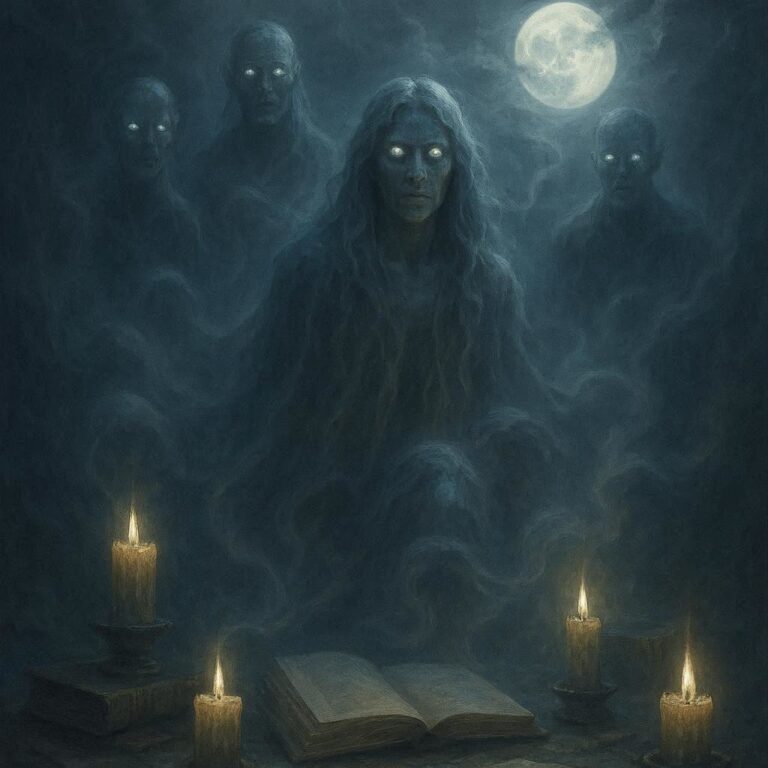
The Shadow: The unknown, dark side of the personality, containing repressed weaknesses and instincts. It is often symbolized by monsters, demons, or dark figures in dreams.
-
The Anima/Animus: The contra-sexual archetype. The Anima is the feminine aspect in the male psyche (often symbolized by a mystical feminine figure), and the Animus is the masculine aspect in the female psyche (symbolized by a wise old man or a group of men).
-
The Persona: The mask we present to the world. Its symbols are often literal masks, uniforms, or social roles.
Jung believed that the process of Individuation—the lifelong journey toward psychological integration and self-realization—is largely mediated through our engagement with these archetypes and their symbols. By interpreting the symbols that arise in our dreams, fantasies, and creative works, we can dialogue with the deeper layers of our psyche, integrate our shadow, and move closer to the wholeness of the Self. Therefore, when we study a spiritual symbol, we are not just learning about an external concept; we are exploring a living, dynamic part of our own inner architecture.
Chapter 2: The Sacred Geometry—The Blueprint of the Universe
If archetypes are the deep psychic patterns, then sacred geometry is their visible, mathematical expression in the physical world. It is the principle that geometry and mathematical ratios are the foundational building blocks of the cosmos, imbued with sacred meaning. From the spirals of galaxies to the structure of a snowflake, the same geometric patterns recur, suggesting an intelligent, underlying order to reality. For millennia, mystics and architects have used these forms to construct temples, create art, and facilitate states of higher consciousness.
The Mandala: Journey to the Center
The word “mandala” is Sanskrit for “circle.” It is a concentric diagram, almost always symmetrical, that represents the universe, a sacred realm, or, as Jung identified, the psyche itself. Found in Hindu and Buddhist traditions (most famously in the intricate sand paintings of Tibetan monks), the mandala’s structure—a center point, radiating outward through circles and squares—maps a spiritual journey.
-
The Perimeter: Often a circle of fire, it symbolizes the boundary of the sacred space and the burning away of ignorance.
-
The Layers: The concentric circles and squares represent the various stages of spiritual progression, with obstacles and deities residing at each level.
-
The Center: The ultimate destination, representing the deity, enlightenment, or the integrated Self. The entire process of creating and then destroying a sand mandala is a profound spiritual practice, a meditation on impermanence and the cycle of life.
In a modern context, coloring mandalas has become a popular therapeutic activity, as the focused, repetitive action helps quiet the mind and allows for a state of meditative concentration, guiding the individual toward their own center.
The Flower of Life: The Pattern of Creation
The Flower of Life is an ancient geometric pattern composed of multiple evenly-spaced, overlapping circles arranged in a flower-like design with a six-fold symmetry. It is found in temples, manuscripts, and sites across the globe, from the Temple of Osiris in Egypt to the Forbidden City in China.
It is considered the fundamental pattern of space and time, containing the blueprints for all creation. Within this single pattern, one can derive every other fundamental form in sacred geometry:
-
The Vesica Piscis: The shape formed by the intersection of two circles, representing the union of opposites and the birth of consciousness.
-
The Seed of Life: The seven central circles, symbolizing the seven days of creation.
-
The Tree of Life: The Kabbalistic diagram of the sephiroth can be perfectly mapped onto the Flower of Life.
Meditating on the Flower of Life is believed to help one connect with the fundamental energy patterns of the universe, promoting a sense of harmony, order, and connection to the source of all life.
The Sri Yantra: The Supreme Tool for Meditation
In the Tantric traditions of Hinduism, the Sri Yantra (or Sri Chakra) is considered the queen of all yantras (geometric meditation tools). It is a complex interweaving of nine triangles—four pointing upward (representing the masculine, Shiva, consciousness) and five pointing downward (representing the feminine, Shakti, energy). These triangles are surrounded by two concentric rings of lotus petals and a protective square with gates, forming a total of 43 triangles.
The entire design is a powerful representation of the cosmos and the human body’s subtle energy system. The central point (bindu) is the point of origin and unity. The meditator’s goal is to journey visually from the outer perimeter, through the intricate layers of intersecting triangles, to the still, silent center, thereby tracing the path of spiritual evolution from the manifest world back to the unmanifest source. The Sri Yantra is not just a symbol to be looked at; it is a dynamic map for a profound inner journey.
Table 1: A Comparison of Major Sacred Geometry Symbols
| Symbol | Origin Culture | Core Meaning | Key Components | Spiritual Application |
|---|---|---|---|---|
| Mandala | Hindu, Buddhist | The Universe and the Self; Wholeness | Concentric circles, squares, a central point | Meditation, focus, representing spiritual cosmologies, psychological integration |
| Flower of Life | Ancient/Global | The Blueprint of Creation; Source Energy | Multiple overlapping circles in a hexagonal pattern | Connecting with universal life force, understanding geometric principles of reality |
| Sri Yantra | Hindu (Tantric) | The Cosmos and the Union of Masculine/Feminine | Nine interlocking triangles, lotus petals, gates | Advanced meditation, awakening Kundalini energy, mapping consciousness |
| Metatron’s Cube | Western Esoteric | The Platonic Solids; Building Blocks of Matter | 13 circles connected by straight lines | Understanding the architecture of the physical realm, protection, balance |
Chapter 3: The Natural World as a Spiritual Lexicon
Long before humans constructed elaborate geometric diagrams, they looked to the world around them for spiritual instruction. The natural world is the original and most enduring scripture, its forms and cycles providing an endless source of symbolic wisdom. These symbols are powerful because they are rooted in observable reality, making their spiritual lessons tangible and immediate.
The Tree of Life: Axis of the World
Perhaps no natural symbol is as universal as the Tree of Life. It appears in countless mythologies: Yggdrasil in Norse cosmology, the Kabbalistic Tree of Life in Jewish mysticism, the Bodhi Tree in Buddhism, and the sacred Asherah poles of the ancient Near East.
The Tree of Life is a multi-layered symbol:
-
Connection: Its roots dig deep into the underworld (the subconscious, the past), its trunk stands firmly in the middle world (the present, material reality), and its branches reach high into the heavens (the superconscious, the future). It is the axis mundi—the world axis—connecting all planes of existence.
-
Growth and Evolution: It symbolizes organic, upward growth, representing the soul’s journey toward enlightenment.
-
Cycle of Life: It sheds its leaves and is reborn each spring, symbolizing death, resurrection, and the eternal cycle of life.
-
Knowledge and Wisdom: From the Biblical Tree of Knowledge to the Bodhi Tree of enlightenment, it represents the fruit of spiritual understanding.
To see the Tree of Life is to be reminded of our own potential to be a bridge between heaven and earth, to grow steadily from our dark, hidden roots toward the light of higher awareness.
The Lotus Flower: Rising from the Mud
In the spiritual iconography of Asia, the lotus flower is paramount. Its symbolism is elegant and profound: it grows in muddy, murky water, yet it emerges pristine and beautiful, untainted by the filth from which it came.
-
Purity and Spiritual Awakening: The lotus represents the potential for purity of heart and mind to develop regardless of the surrounding “mud” of worldly delusions, attachments, and suffering.
-
Non-Attachment: Its leaves are hydrophobic; water beads up and rolls off. This symbolizes the ideal of being in the world but not of it—engaging with life without being attached to its dramas.
-
Gradual Expansion: The lotus opens its petals one by one, symbolizing the gradual unfolding of the soul’s potential.
-
Cosmic Manifestation: In Hinduism, the universe is sometimes depicted as a thousand-petaled lotus from which Brahma emerges to create the world.
The lotus teaches a powerful lesson of resilience and hope. It assures us that our most challenging circumstances—the “mud” of our lives—can become the very fertilizer for our most beautiful spiritual blossoming.
Chapter 4: Creatures as Messengers—Animal Symbolism and Totems
The animal kingdom has always been a source of wonder, fear, and inspiration for humanity. Animals, in their essence, embody specific qualities and powers that humans have long sought to understand and emulate. The concept of animal totems, or spirit animals, is a nearly universal belief in indigenous and shamanic traditions, where an animal is seen as a spiritual guide or protector.
The Owl: Wisdom or Omen?
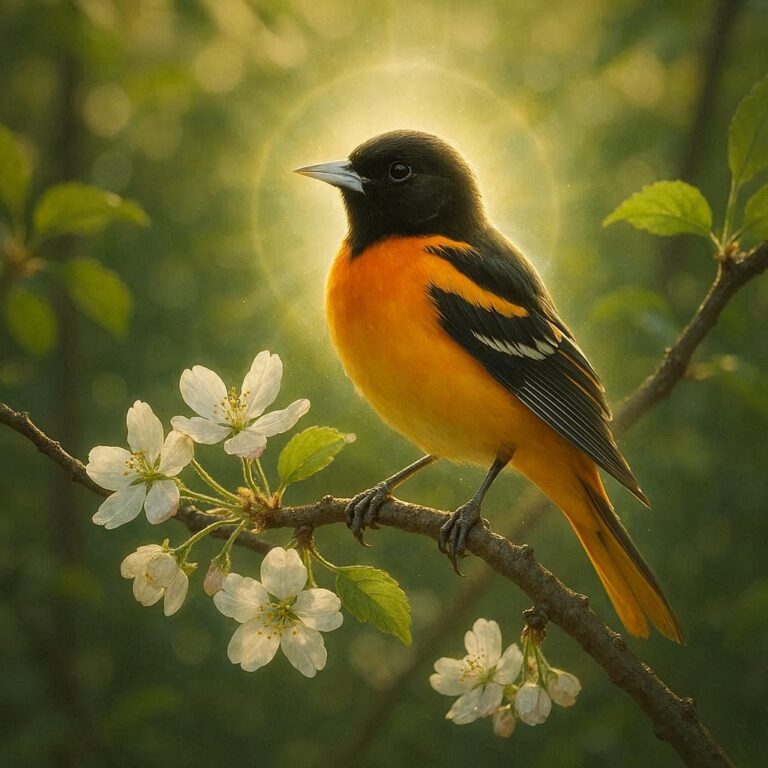
The owl is a powerful and paradoxical symbol. In the Western tradition, derived from Ancient Greece where the owl was sacred to Athena, the goddess of wisdom, it represents knowledge, erudition, and penetrating insight—the ability to see what others cannot. Its nocturnal nature allows it to navigate the “darkness” of ignorance.
However, in many other cultures, the owl is an omen of death, misfortune, and a messenger from the underworld. This duality is key to its symbolism. The owl’s wisdom is not just intellectual; it is the wisdom of the shadow self. It sees in the dark, forcing us to confront what we would rather keep hidden. An owl as a totem challenges you to look beyond surface illusions, to trust your intuition, and to face your fears with clarity.
The Serpent: Kundalini and Transformation
Few symbols are as complex and universally potent as the serpent. It is often reviled in Abrahamic traditions as a symbol of temptation and evil (the serpent in the Garden of Eden). Yet, in most other cultures, it is a profoundly positive and sacred symbol.
-
Rebirth and Healing: Because it sheds its skin, the serpent is a universal symbol of death and rebirth, healing, and regeneration. The Rod of Asclepius, a serpent entwined around a staff, remains the symbol of medicine today.
-
Kundalini Energy: In Hindu and Yogic traditions, the serpent (Kundalini) represents the primal spiritual energy coiled at the base of the spine. Through spiritual practice, this “serpent power” uncoils and rises through the seven chakras, leading to enlightenment.
-
Wisdom and Eternity: The Ouroboros—the serpent eating its own tail—is an ancient symbol for eternity, the cyclic nature of life, and the unity of all things.
The serpent symbolizes the transformative power of life force itself. It teaches that the very energy which can be destructive if left unconscious (like a venomous bite) can, when consciously awakened and directed, become the source of our highest spiritual awakening.
Chapter 5: The Alchemy of Numbers and Colors—Vibrational Signatures
Spiritual symbolism is not confined to visual forms. Numbers and colors carry their own intrinsic, vibrational frequencies that have been assigned deep spiritual meanings across various systems.
Numerology: The Divine Mathematics
Pythagoras, the Greek mathematician, famously said, “All is number.” He and his followers believed that the universe is mathematically structured and that numbers are the archetypal patterns through which the divine mind manifests. This is the foundation of numerology.
-
1: The number of unity, the source, the beginning, and assertion. It represents the individual, the pioneer.
-
2: Duality, partnership, balance, receptivity, and the tension of opposites that creates dynamism.
-
3: The triad—mind, body, spirit; past, present, future; creation, preservation, destruction. It represents creativity, expression, and joy.
-
4: Stability, foundation, the four elements (earth, air, fire, water), the four directions. It represents order, practicality, and building.
-
5: Change, freedom, adventure, the five senses. It represents dynamic activity and sometimes chaos.
-
6: Harmony, balance, responsibility, service, love, and the home.
-
7: The seeker, the thinker, spirituality, mysticism, and inner wisdom. (Seven chakras, seven days of creation, seven virtues/deadly sins).
-
8: Power, authority, abundance, karma (cause and effect), and material success.
-
9: Completion, humanitarianism, wisdom, and the end of a cycle.
By studying the numbers in our lives (like our birth date or life path number), numerologists believe we can understand our soul’s purpose, challenges, and innate tendencies.
The Spiritual Spectrum of Color
Colors are literally different wavelengths of light, and they have a demonstrable psychological and physiological effect on us. Spiritually, they are often mapped to the body’s energy centers, the chakras.
-
Red (Root Chakra): Grounding, survival, passion, vitality, and physical energy.
-
Orange (Sacral Chakra): Creativity, sexuality, emotion, joy, and sensuality.
-
Yellow (Solar Plexus Chakra): Personal power, will, intellect, and self-esteem.
-
Green (Heart Chakra): Love, compassion, healing, balance, and connection.
-
Blue (Throat Chakra): Communication, truth, expression, and peace.
-
Indigo (Third Eye Chakra): Intuition, perception, psychic abilities, and imagination.
-
Violet/Purple (Crown Chakra): Spirituality, connection to the divine, cosmic consciousness, and transcendence.
Consciously working with color—through clothing, meditation, or environment—is a way to interact with and balance these different energetic frequencies within ourselves.
Chapter 6: Symbols in Dreams—The Royal Road to the Unconscious
Sigmund Freud called dreams the “royal road to the unconscious,” but it was Jung who fully developed the idea that dreams are primarily symbolic. While dreaming, the conscious, logical mind is subdued, and the unconscious speaks its native language—the language of symbols. A dream symbol is intensely personal, yet it also draws from the collective archetypal wellspring.
Interpreting dream symbols requires a nuanced approach. While there are common interpretations (e.g., water often represents emotion, a house can represent the self), the true meaning is always contextual to the dreamer. A snake in one person’s dream might represent a feared transformation, while in another’s, it could signify the awakening of healing energy (Kundalini).
The key is to explore the symbol’s personal resonance. What do you feel when you see the symbol in the dream? What associations does it bring up? By keeping a dream journal and reflecting on these symbolic narratives, we open a direct line of communication with our deeper Self, receiving guidance, warnings, and insights that our waking mind may overlook.
Chapter 7: Personal and Modern Symbols—Logos, Tattoos, and Synchronicities
Spiritual symbolism is not confined to ancient traditions. It is a living, evolving language. In our modern world, we create and interact with symbols constantly, often without realizing their deeper impact.
-
Logos: Corporations spend millions designing logos that are not just identifiers but symbolic vessels for their brand’s values. The Apple logo (the bitten apple) evokes knowledge, discovery, and a hint of the forbidden fruit. The Nike Swoosh represents motion, victory, and the wing of the Greek goddess of victory. These symbols work on a subconscious level to create emotional connections.
-
Tattoos: The ancient art of tattooing is, for many, a powerful form of modern spiritual expression. People choose symbols—from intricate mandalas to animal totems, sacred geometry, or quotes in ancient scripts—to permanently etch their spiritual beliefs, life stories, and protective talismans onto their bodies. The tattoo becomes a living, breathing part of their personal mythos.
-
Synchronicities: Carl Jung defined synchronicity as an “acausal connecting principle,” a meaningful coincidence. When you are thinking about a specific concept and then see a symbol representing it everywhere—on a license plate, in a song, in a conversation—it can feel like the universe is winking at you. These synchronicities are personal symbols from the cosmos, encouraging you to pay attention to a particular path or idea. A repeated number sequence (like 11:11 or 333) is a classic example of a modern, personal symbolic message.
Recognizing that the symbolic language continues in our daily lives empowers us to find meaning and guidance in the most mundane moments, transforming our entire reality into an interactive, spiritual dialogue.
Conclusion: Weaving the Tapestry of Meaning
Spiritual symbols are the timeless threads with which humanity weaves the tapestry of meaning, connecting the visible to the invisible, the personal to the cosmic.
By learning this secret language of the soul, we gain a key to understanding our deepest selves, our dreams, and the archetypal patterns that shape our human experience.
Ultimately, engaging with symbols is not a passive act of decoding, but an active, living practice that invites us to participate consciously in the great, unfolding story of existence.
Frequently Asked Questions (FAQs)
1. What is the difference between a sign and a symbol?
A sign (like a road stop sign) has a single, clear, and agreed-upon meaning. Its purpose is to convey information directly. A symbol, however, is multi-layered, evocative, and inexhaustible. It points to a deeper, often complex reality that cannot be fully expressed in words (e.g., a cross, a lotus flower). A sign directs you; a symbol transforms you.
2. Can a symbol have different meanings in different cultures?
Absolutely. Context is everything. The most potent symbols often have contradictory meanings across cultures. The serpent is a prime example: it is a symbol of evil and temptation in the Christian tradition, but a symbol of healing, wisdom, and rebirth in many others (like the Greek Rod of Asclepius or the Hindu Kundalini). It is crucial to understand the cultural and historical context of a symbol before interpreting it.
3. How can I discover my own personal symbols?
Your personal symbols are revealed through your interests, recurring dreams, and synchronicities.
-
Dream Journal: Keep a notebook by your bed and write down your dreams immediately upon waking. Look for recurring images, characters, or settings.
-
Notice Resonances: Pay attention to which symbols, animals, or images you feel a strong, inexplicable pull towards. What images do you choose for your phone’s wallpaper or the art in your home?
-
Watch for Synchronicities: Be mindful of patterns, numbers, or symbols that seem to appear repeatedly in your daily life. These are often personal messages from your unconscious or the universe.
4. How can I use symbols in my daily spiritual practice?
You can incorporate symbols in simple, powerful ways:
-
Meditation: Gaze at a symbol (a yantra, a mandala) during meditation to focus your mind and absorb its energetic qualities.
-
Altar: Place objects that represent your spiritual goals (a crystal for clarity, a feather for freedom, a statue of a deity) on a personal altar.
-
Journaling: Draw or write about a symbol that has appeared to you. Explore its traditional meanings and, more importantly, what it means to you.
-
Intention Setting: Wear a piece of jewelry with a specific symbol (e.g., a Tree of Life pendant for grounding) to remind you of your intention throughout the day.